The search fornatural ventilation for industries e thermal comforthas increased every year. The desire to operate with clean energy, improved air quality and the reduction of various problems that can be caused by living indoors, including respiratory diseases, are some of the advantages.
It is worth mentioning that several mechanical systems contribute considerably to energy consumption, causing environmental problems.
Therefore, thebenefits of natural ventilation, such as reducing operating costs and improving indoor air quality are being recognized. Another notable point is that passive cooling using natural ventilation has become an attractive alternative to alleviating the problems associated with air conditioning.
Are you interested in the subject and want to know more? Then check out the full article!
What is thermal comfort
For those who have never heard it, it is normal for this term to be strange. When we talk aboutthermal comfort, the objective is the measures and actions that make the individual feel satisfied in the place where they are located.
There are several metrics used to evaluate thermal comfort: the most common is air temperature, but there are others that take into account radiant temperature, humidity, air movement, and even the clothes employees are wearing.
Just imagine that we spend a lot of our time indoors – whether at home, at work or in learning environments. That's why it's so important to think about spaces that can offersuitable temperature.
It is necessary to take into account that the absence of this type of convenience is capable of altering productivity, physical and emotional well-being and even health. This is because many employees may present symptoms of respiratory diseases or even malaise in the absence of thermal comfort.
It is worth remembering that each of us has a preference when it comes to the weather. While some like to work in colder environments, others can produce more in warm places.
In this sense, the big challenge is to find an option that can be pleasant for both, without harming anyone. In summary, when we talk aboutthermal comfort, theclimate issues and individual preferences.
Furthermore, there are several other advantages that can arise from using the appropriate approach, including savings on bills and professional satisfaction, factors that contribute to development and performance. Let's delve deeper into them below:
Why thermal comfort is important
There are several situations in which it is important to know how to calculate thermal comfort. Here are some common reasons to consider it as part of a design project:
- The project has a natural ventilation component and the plant needs to be designed to maximize the frequency of comfortable conditions;
- The project has areas with a large amount of glass, and it is important to check how satisfied the occupants near these areas will be;
- The project is working to achieve a high pass rate or a good result with regards to comfort, and the first tests need to be carried out to check whether it will be possible to achieve the desired performance.
Whether or not you are thermally comfortable depends on theheat balance of the occupant in relation to the environment. The most common way to evaluate the quality of a closed environment, from the point of view of thermal comfort, is through the evaluation of certain factors, which influence this heat balance:
- Air temperature;
- Air speed;
- Relative air humidity;
- Metabolic Rate;
- Type of clothing;
- Temperature of internal surfaces.
How to build a comfortable space in relation to temperature
In addition tosatisfaction rate is extremely higher for spaces with natural ventilation, these environments tend to have better performance in terms of thermal comfort and indoor air quality, compared to other buildings.
According to Sidonio Porto, an architect specialized in projects aimed at the residential, commercial and industrial segments, for the temperature in a factory environment to be pleasant, there must be severaldesign solutions: “These are architectural resources such as thepermanent cross ventilation, which can be controlled by hollow elements, or fixed open frames, or movable frames”, he says.
Furthermore, the use of light colors on the envelope and roof and quality materials for thermal insulation are fundamental: “I use metal structures with sandwich-type tiles on the roofs, with good results”, says Sidonio.
To achieve a certain comfort in a building, thermal efficiency and the right insolation must be taken into account when designing it, as well as theemphasis on natural ventilationand the shading of facades, and not just their space and decoration.
More than thinking about what the internal result of this project will be, it is essential to take into account how each of the steps will be carried out so that daily life in this location can be pleasant for everyone involved, in all seasons of the year.
Currently, the challenge is not only to provide a pleasant climate for the occupant to carry out their activities with greater benefit, but also to do soconsuming little energy.
Artificial climate control, such as the famous air conditioning, is not always a guarantee of thermal comfort and can still be a villain, whether for energy consumption or even for health. Several people report problems when they are exposed to this type of device for a long time.
In this case, the best solution, especially in buildings with large glazed facades, is to have allies likesunshades, blinds and polyester films applied to the glass, which reduce glare caused by brightness and block UV rays, reducing heat absorption.
The solution is to think of a project that takes into account each of the particularities of the space, thinking of ways to offer good coexistence and maintain each space with air quality and well-being, without exaggerating the consumption of energy or artificial goods.
Shading and breezes
The shading technique is very common on slabs and in outdoor environments. To achieve thermal comfort, some equipment is installed in the area, creating shading. It is worth highlighting that any material allows this shading.
Brises are architectural elements that block the incidence of sunlight, making it possible to shade facades.
"And, in the case of industries, the brise is much more simplified than in a curtain facade, for example, as it can be a simple screen. We can even let vegetation climb onto the screen of a wall that catches the setting sun, for example, creating an aesthetic and functional brise", says the architect.
Onenatural ventilation project in industry, for example, must be very well planned and all details must be taken into consideration, from the climatic conditions of the place where the construction will be carried out to the simplest materials.
This is because each of these aspects can influence the materials used and the results obtained. Just take as an example companies that are located in the south of the country. With the arrival of winter, the cold begins to become part of everyday life.
So, how can we ensure that there is enough space to alleviate this feeling for employees? What materials and solutions can alleviate freezing wind and intense cold, especially on rainy or frosty days?
Sheds
This type of covering is very common in industrial projects, as it allows hot air, which penetrates the environment through the lower surfaces of the facades, to rise and leave naturally.
A less conventional solution for bringing fresh air to the factory floor is geothermal ventilation, as Sidonio Porto highlights: “Through a buried tube, the ambient air is taken underground through a pump, and returns cooled”, thus ensuring greater thermal comfort.
As much as this is an uncommon solution, it is worth highlighting that it can be an alternative to using air conditioning,generatingenergy savingand promoting well-being among employees.
Do you want to know other natural ventilation options? Then download thesolutions catalog!
MB Group solutions for thermal comfort
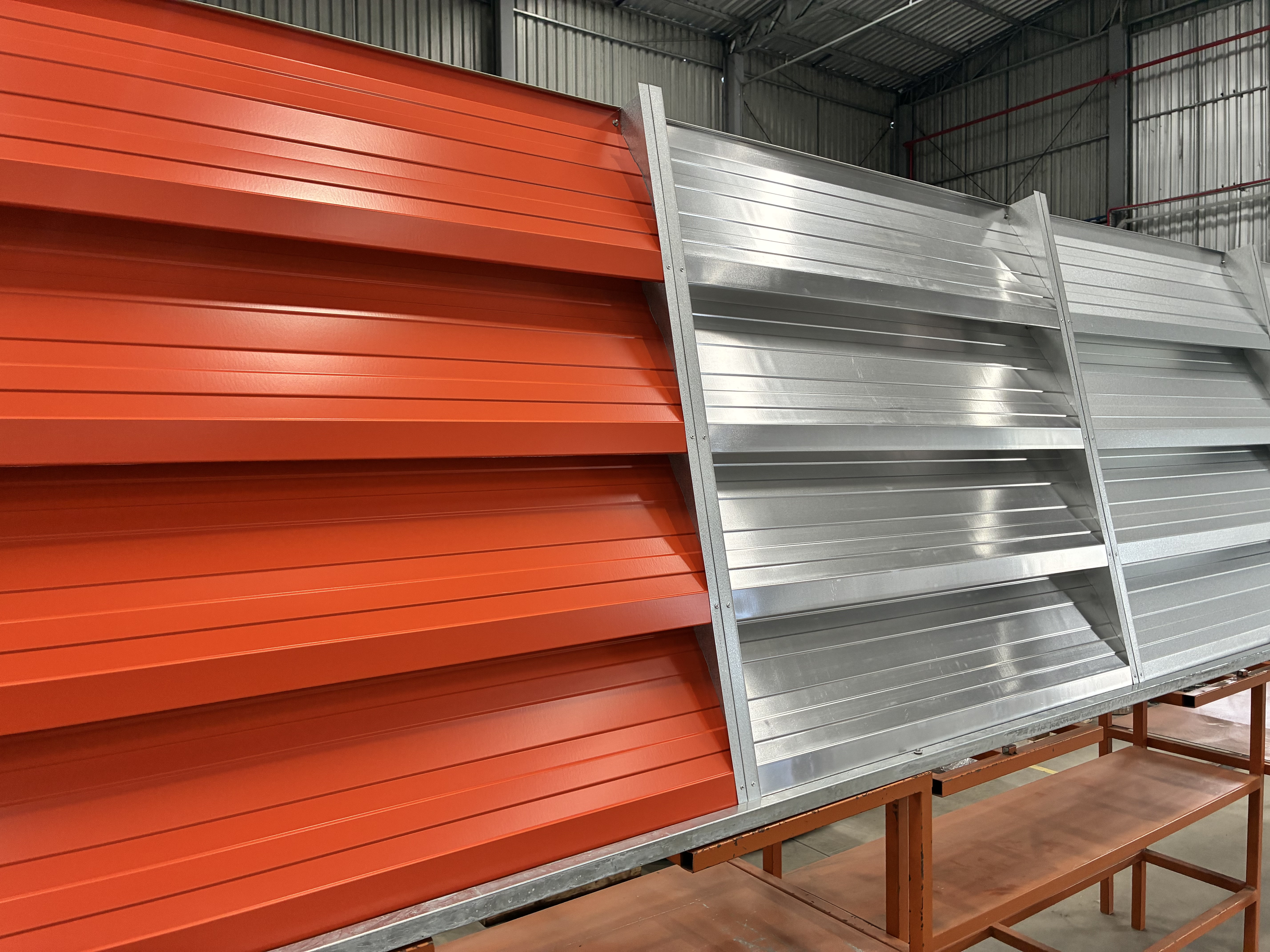
One of the most sought after options by companies and industries that can provide thermal comfort in a simple and widespread way is thecreating constant and natural air circulation, using industrial shutters. The structures are responsible for creating air entry and promotingnatural lighting.
This mechanism can be fixed or mobile, with manual or automated activation. The option is ideal for saving energy, in addition to being a solution that promotes the entry and exit of natural air, making the place a conducive and comfortable environment for everyone.
Just imagine that in spaces that have air conditioning in the summer and heaters in the winter, many professionals end up leaving the place withbreathing problems, especially those who already have a complication.
Not to mention that the temperature that is determined in each of these devices almost never suits everyone. So nothing better thanenjoy the real weather.
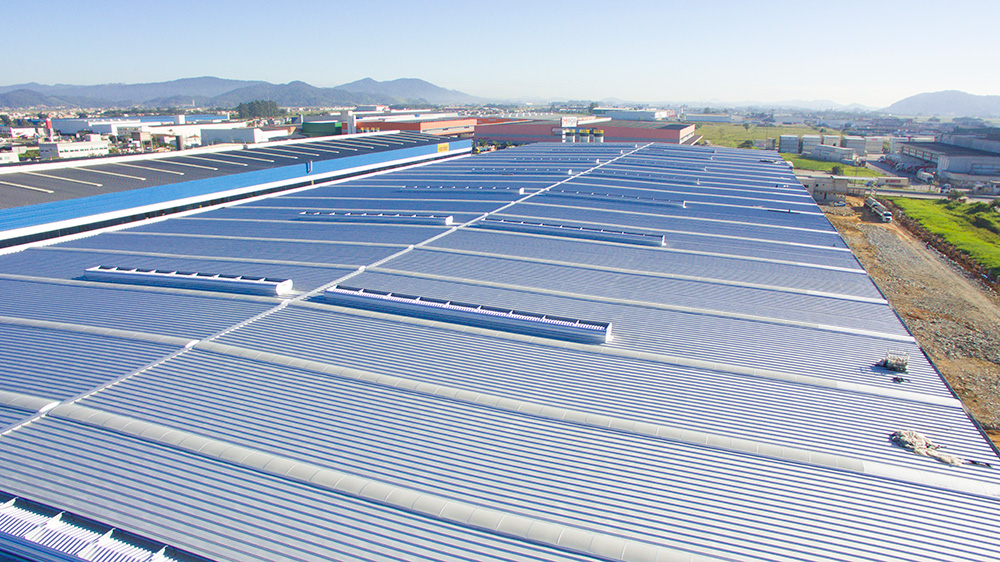
In this idea of using natural aspects to promote thermal comfort,lanterns play an important role, as they allow the accumulated hot air to be expelled through the roof, generating a continuous current.
This way, no factory environment will suffer from that stuffy temperature, which is mainly responsible for causing discomfort and a drop in performance in several teams. Remembering that, by expelling hot air, this alternative ends up improving the quality of internal air, even contributing to the breathing of professionals.
The use of shutters and louvers, when properly sized and installed, also prevents condensation inside the building and eventual dripping from the inside of the roof.
In other words, by opting for this solution, it is possible to avoid future problems due to rain, promote well-being in the workplace, the economy, the use of sustainable resources and productivity. What else needs to be changed to offer a good workplace
Interested in the solutionGet in touch with our teamand see how Grupo MB can help your company.