There is no single answer to this question and it is not definitive, becauseThe ideal option for better efficiency is to mix the two formats. When talking about lamps for industrial warehouses, the most common is to find the LED model, which is a cold light with uniform luminosity, in addition to being dimmable to increase savings.
Natural lighting, in turn, can always be used in industrial warehouses to allow sunlight to enter, whether the weather is cloudy or not. This brings benefits toimproving internal visibilityin the shed, inthermal comfortenvironment for employees and also results ingreater energy savingsallowing the lights to be turned off during different hours of the day.
Discover the main benefits and understand how using the models in a complementary way can generate greater energy efficiency in your industry.
Workplace lighting standards
From a legislative point of view, there isStandard 8995of the Brazilian Association of Technical Standards (ABNT), which regulates the adequate lighting required for different types of indoor work environments. The standard deals not only with the quantity of light that must be present, but also with its quality. The objectives of providing lighting established by the standard are:
- Visibility
- Movement
- Security
- Productivity
- Visual ergonomics
To adapt to each of them, it is necessary to take into account several parameters and carry out analyzes within your work environment. In the case of factories, the use of lamps for industrial warehouses linked to natural lighting resources can help to find this suitability.
One of the main factors in this analysis must be the illuminance index — light density necessary to perform visual tasks — in the task area, which is the exact location where each activity in that warehouse will be carried out. This region must be adequately lit to provide comfort and visual safety,eliminating the chances of failures and accidents.

How to save money on industrial warehouse lamps
Among the different possible types of lamps for industrial warehouses, the LED feature tends to be the most economical and widely implemented. THEshed lightingIt needs to take place in uninterrupted periods, in different situations, including at night, when there is no incidence of natural light.
This way,Using LED lamps can be an economical solution for your industry, even thinking about the equivalences that can be made with its dimming, following ABNT standards. The recommended lighting levels depend on the purpose of the warehouse: a minimum of 300 lux or 500 lux of illuminance (lumens per square meter) in the production sector and 150 lux in storage and passage sectors.
Likewise, it is possible that your warehouse has different areas or needs to meet more than one lighting need. For this, theLED bulbs can be dimmedthrough sensor technologies that identify the light present in the environment and regulate the intensity of each lamp to reach the correct desired index.
Choosing the appropriate lamp for your shed must be made by experts and based on theanalysis of a series of aspectsrelated to density and luminous efficacy, reproduction index and color temperature, among many others. Having a specialized team will be essential to diagnose each of these points and develop the best project for your warehouse.
Consolidating energy efficiency in industry
The use of natural light in a complementary way to artificial lighting promotes great gains in terms of consolidating energy efficiency in the factory. This feature is typically implemented through the use of Domus. There are several ways to take advantage of thenatural light in warehouses, which may be through openings in the walls or roof. The important thing is to always have a good lighting project in hand that takes into account all the characteristics of the environment in which you are working and the needs of the people involved there.
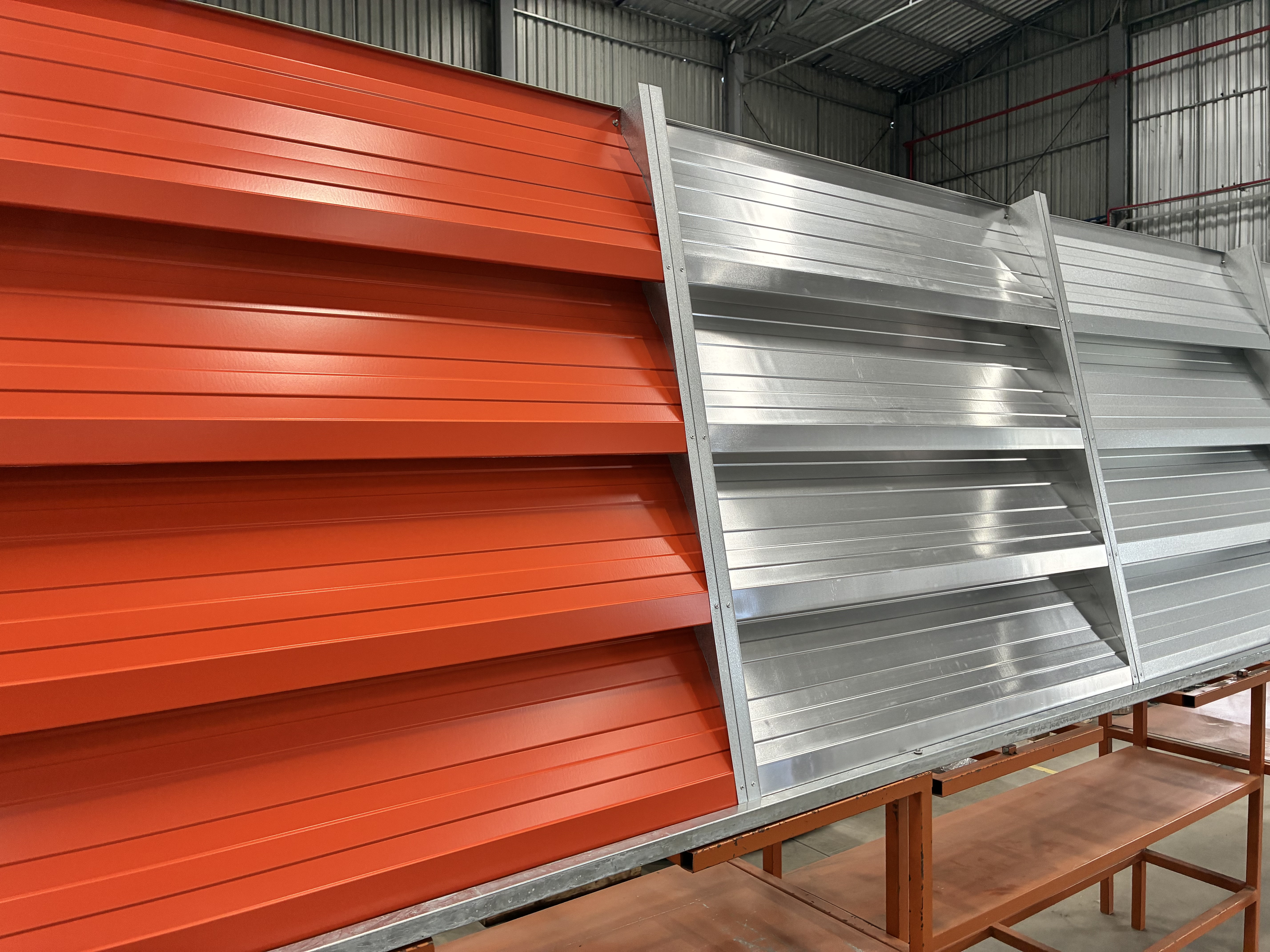
An example that can help in greaterenergy savings in your industry is to apply Domus Prismático, and not straight ones, as these cause the Sun to shine directly on people and machinery, causing losses in terms of thermal comfort and making it necessary to spend energy on cooling the place.
Translucent roofs that have expired their useful life or are built withlow reflectance materialThey can cause lighting problems inside the warehouse, so it is always important to know the origin and quality of the products and carry out maintenance within the recommended interval of 12 months.
If you believe that your factory is showing excessive energy consumption and see possibilities to optimize this by linking the use of lamps for industrial warehouses to natural lighting, follow ourblogand discover how you can comply with regulations, obtain financial benefits and also help the environment.