Electricity expenses occupy the second position in the ranking of expenses that weigh most on the Brazilian budget. This is what the survey carried out byAssociation of Large Industrial Energy Consumers (Abrace), in partnership with the Ipespe institute.Nine out of ten survey respondents report that their electricity bills are currently more expensive than in the last five years.
Water crises are one of the factors responsible for this increase. However, this problem was more serious in 2021. Since then, Brazil has managed to overcome droughts due to the arrival of the rainy season. However, the scenario is still not completely optimistic. Therefore, thinking about sustainable alternatives to shield the impacts of water crises continues to be a priority in the most diverse sectors.
In industry, it is no different. This segment has in its favor thesustainable architecture, one of the main responsible for energy efficiency in factories. In this trend, in addition to reducing energy consumption, the company stands out for its sustainability, ensuring better positions in the market.
That's what we'll talk about in this content. Continue reading and see how to reduce electricity costs by investing in sustainable lighting and natural ventilation solutions!
Water crises and the rise in electricity
Throughout 2021, theelectrical energywas the item that weighed the most on Brazilians' pockets, according to data fromBrazilian Institute of Geography and Statistics (IBGE). At the beginning of the second half of 2021, the National Electric Energy Agency (Aneel) started to adopt the so-called Flag 2 to compensate for the impacts generated by water crises.
This measure was necessary because, with the scarcity of water, it was necessary to use thermoelectric plants to generate energy. As the activation of thermoelectric plants is costly, theraising the tariff flag was a way of passing on these costs to the consumer.
However, with the arrival of the rainy season between 2021 and 2022 – which refilled the reservoirs and eased the operation of the systems – Brazil managed to overcome the water crisis. So much so that, in April 2022, Aneel brought forward the end of charges related to the water scarcity flag. The prospect is that the charging flag will remain inGreen category– without additions – in97% of scenarios by the end of 2022.
But it is worth remembering that, despite the relief related to the mitigation of water crises, the scenario is still very worrying, especially considering the period of economic instability and high inflation.
Not surprisingly, Aneel increased in56%the value of the Yellow Flag and in57%Red 1. In other words, if it is necessary to resort to these scarcity flags again, the value of electrical energy will be even higher than in 2021. Therefore, raising awareness around sustainable practices continues to be one of the most viable paths toreduction in energy consumption.
In the industrial segment, this concern is even more urgent. This is because the extension of production chains consumes much more energy. In this sense, in addition to investing inrenewable sources, managers have prioritizedintelligent systemsfor lighting and ventilation in industries. We will talk more about these systems throughout the content.
How different tariff flags impact water crises
We saw that the adoption of the water scarcity flag represented a significant increase in the value of electrical energy in Brazilians' pockets. We also saw that, with the arrival of the rainy season, the Green flag came back into force. In this case, it means that there is no increase in the variable costs of generating electricity.
In addition toGreen Flag, Aneel works withYellow Flags, Red 1 e Red 2. The values of these tariff flags for the period from July 2022 to June 2023 are defined as follows:
- Yellow Flag (less favorable conditions): R$ 2,989 for every 100 kWh consumed;
- Red Flag 1 (unfavorable conditions): R$6,500 for every 100 kWh consumed;
- Red Flag 2 (very unfavorable conditions): R$9.795 for every 100 kWh consumed.
How the industrial sector can help avoid water crisis scenarios in the country
For some time now, investment in renewable energy sources has become a global trend, such aswind capture, solar energy e biomass. In Brazil, this segment has grown exponentially in recent years and gained even more strength in the context of water crises. But, as they arehigh investments with long-term returns, may not be the best option for those in a hurry.
In this case, other sustainable architecture alternatives are more interesting, such aslighting e natural ventilation. These solutions bringfaster return and have results that go beyond energy savings.
This type of solution helps industries achieve energy efficiency. Furthermore, natural lighting and ventilationaccelerate productivity in factories, making them, in fact, sustainable.
Not surprisingly, industries that combine energy efficiency and optimized processes are more likely to receive theLEED Certification. The main industrial sustainability seal in the world, theLEEDis used in more than160 countries. Certification works as acertificate of corporate social responsibility, proving the efficiency of its production processes.
Below, we provide more details about these sustainable solutions that can optimize your production chain, bringing energy efficiency and significantly reducing the impacts of water crises.
Natural lighting solutions
Youprismatic domesThey are champion options when we talk about natural lighting for industry, operating at zero energy costs. With these structures, the factory is no longer hostage to artificial light bulbs throughout the working day.
This is only possible thanks to thepolycarbonate prhymatic. The technology ensures optimal diffusion of sunlight, blocking UV rays and keeping the shed well lit for an average ofeight o'clockdaily.
A reduction in the use of lampsfor so long and over several months it generates a very significant reduction in energy tariffs. In addition to budgetary control, the industry also benefits in terms of performance. An effectively lit environmentpromotes employee productivity and well-being.
Natural ventilation solutions
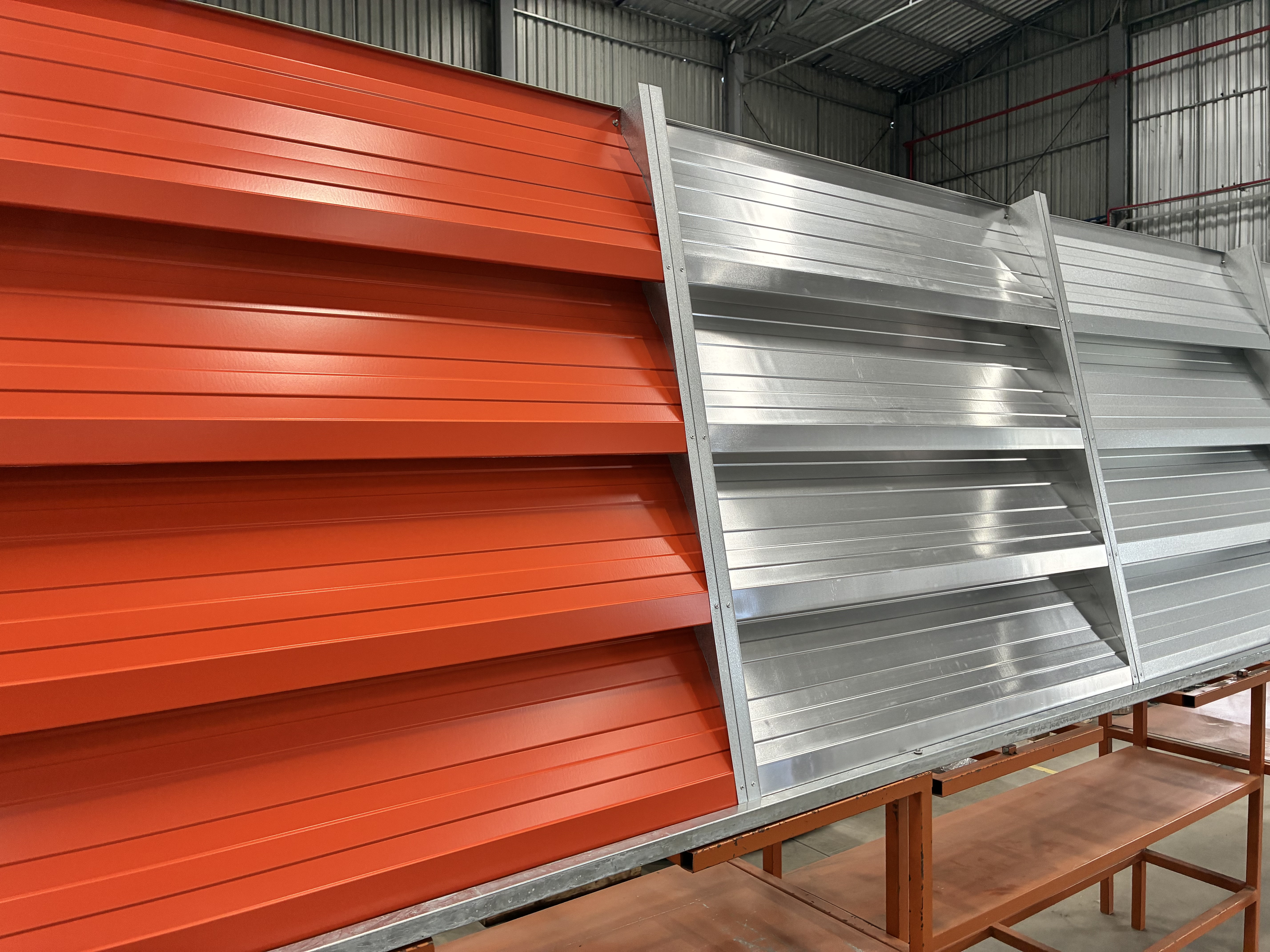
Natural ventilation systems that combineshutters e industrial lanternsare also excellent resources for those looking forenergy efficiency. These solutions provide thermal comfort inside the warehouse and avoid the use of air conditioning devices. Furthermore,air quality improves considerablyand constant renewal prevents the accumulation of stale air.
We can say that natural ventilation systems are essential solutions for those looking to combine thermal comfort, team productivity and energy savings in industry. In addition to providing a better quality of life in the workplace, these solutions help managers overcome the impacts of water crises in more alarming scenarios.
Do you know how ventilation projects contribute to sustainability in the industryTake our quiz and find out if you are up to date on the subject!
Solutions focused on sustainability
Solutions focused on sustainability, such as domes, lanterns and industrial shutters, have been consolidating themselves as priorities both in new works and inprojects ofindustrial retrofit. The practice of retrofitting is often the most viable technique for modernizing the industrial warehouse without having to pay for a new structure from scratch.
The installation of lighting and natural ventilation solutions are highlighted in this type of project, and can even be implemented with the help of computational engineering methodologies that guarantee the high performance of the systems.
The application ofComputational Fluid Dynamics (CFD), for example, allows you to validate in virtual reality the calculations necessary to size amaximum performance natural ventilation design. Thus, in addition to ensuring thermal comfort and air quality in the industrial environment, there will be no energy consumption from these systems or the use of air conditioning devices, which can be dispensed with.
Therefore, if you are looking to modernize your factory facilities for energy efficiency, you already know where to start your investment. Did you like the idea? Enjoy and seehow the Lubeka factory reduced its electricity billin a short time with intelligent solutions fromMB Group!