Summary: Grain storage is vital for food security and the economy, directly influencing the quality and price of grains. The lantern appears as an effective innovation in storage, offering humidity control and natural ventilation, reducing pests and spoilage. This system, in addition to saving energy, is easy to install and requires low maintenance. Understand better!
O grain storageplays a crucial role in the food supply chain. Aspects such as food security, saving resources and ensuring food supply for the population stand out as positive points of the process.
In this post, we bring important information about grain storage and how the lantern presents itself as a modern solution to avoid losses. Check it out!
The importance of grain storage
Grain storage is crucial foreconomy and securityfood, directly affecting the price and quality of grains. Understand more about the subject.
Marketing and export
The process allows grains to be stored after harvest, enabling sale and export at strategic moments. This has a positive impact on the economy, sincegrains can be sold at more advantageous prices, generating significant revenue for producers and the country as a whole.
Price stability
When there is aconstant supply of stored grains, prices do not suffer drastic fluctuationsdue to bad harvests or excess production. This is beneficial both for producers, who can predict their yields, and for consumers, who do not face extreme variations in food prices.
Food safety
In times of scarcity, bad harvests or adverse weather conditions, stored grains serve as astrategic food reserve, ensuring access to food for the population. This is crucial for the well-being of communities, especially in vulnerable regions.
Price
Proper storage allowsproducers sell their grains at the most advantageous time, which, in turn, affects the price of grains on the market. When grains are stored inappropriately, significant losses can occur, resulting in a smaller supply and higher prices for consumers.
Quality
Grain quality can be preserved throughproper storage. Inadequate storage conditions, such as high humidity and temperature, can lead to grain deterioration, making them unfit for human consumption.
Work safety
Safety at work in silos and warehouses is extremely important forprevent accidents. Inadequate conditions, such as excessive humidity and lack of ventilation, can lead to risks for workers.
Furthermore,Work accidents in silos can occur due to falls, burials and exposure to toxic substances. Therefore, it is essential to follow safety protocols, provide adequate training and use protective equipment to ensure a safe work environment.
The challenges of grain storage
Grain storage faces several significant challenges, the main ones being moisture, pests and spoilage, as well as the need for a controlled environment. Let's explore these challenges!
Humidity
An excessively humid environment can lead todevelopment of mold, mildew and, ultimately, grain deterioration. On the other hand, very low humidity can result in grain drying out and loss of quality. Therefore, controlling humidity is essential to preserve the integrity of the product.
Pests
Insects, rodents and other animalspose a significant threat to stored grain. They can cause substantial grain losses, either through direct consumption of the grain or through contamination. Therefore, pest control requires the use of appropriate techniques and chemicals to prevent infestations.
Deterioration
The grains may deteriorate due tobut storage conditions, resulting in loss of quality and making them unsuitable for human or animal consumption. Furthermore, grain spoilage negatively affects nutritional value and commercial viability.
Temperature
Excessive temperature variationsaccelerate the deterioration of grains and favor the development of pests. Oneenvironment with stable temperatureis necessary to preserve the quality of the grains.
Ventilation
Adequate ventilation is important forprevent the accumulation of moisture and heat. This helps maintain ideal storage conditions, ensuring air circulates effectively and preventing mold and mildew from developing.
Continuous monitoring and control
Grain storage requires constant monitoring and adjustments to maintain ideal conditions. This may involve theuse of sensors, temperature and humidity control systems, and the application of corrective measureswhenever necessary.
Traditional storage methods
There are several traditional grain storage methods, with emphasis on silos and warehouses. We analyze the advantages and disadvantages of both below. Check it out!
Silos
Advantages:
- vertical storage, saving space;
- effective protection against pests, especially in airtight silos;
- goodair circulationto maintain grain quality;
- automated unloading facility.
Disadvantages:
- significant initial cost in construction;
- need for regular maintenance to ensure airtightness;
- requires specialized equipment for loading and unloading;
- capacity limitations, which may be unsuitable for large harvests.
Warehouses
Advantages:
- versatility for storing different types of grains and products;
- ease of access to grains, simplifying loading and unloading;
- availability in various sizes to meet storage needs;
- more affordable initial cost compared to bulk silos.
Disadvantages:
- limited protection against pests compared to airtight silos;
- need for ground space, which can be problematic in urban areas or areas with limited space;
- require maintenance, including temperature and humidity control;
- Exposure to external elements can pose a risk of grain contamination.
The choice between grain storage silos and warehouses depends on specific needs, local conditions and available budget, considering the advantages and disadvantages of each method.
Innovations in grain storage
Innovations in grain storage have played a key role inreducing losses and increasing efficiencyover the years. Several modern technologies and practices have contributed to improving food and economic security.
Below, check out some of these innovations and how they can positively impact grain storage.
- Airtight silos: sealed structures that prevent the entry of air and humidity, preventing pests and grain deterioration. They are effective in areas prone to infestation, reducing losses and reducing the need for chemical products to control pests.
- Temperature and humidity control: allow maintaining ideal conditions for grain storage through automatic monitoring and regulation of these factors.
- Quick drying: reduce the moisture content of the grains after harvest, preventing the development of fungi and mold, preserving the quality of the grains during storage.
- Storage in bulk bags: It is especially useful in areas where storage infrastructure is limited, protecting grains from moisture and pests, reducing losses.
- Sensors and remote monitoring: allow you to continuously monitor storage conditions, such as temperature, humidity and pest levels, in addition to early detection of problems and taking immediate corrective measures.
- Grain treatments: Innovations in the treatment of grains with safe and effective chemicals for pest control also contribute to the preservation of grains during storage.
- Underground storage: practice that offers more stable temperatures and natural protection against pests. This innovative approach is particularly useful in regions with extreme climate variations.
- Good handling and storage practices: Training and education on good handling and storage practices are essential to reduce losses. This includes proper cleaning of storage areas, the use of specific equipment and the correct management of grain rotation.
The lantern and its relevance in grain storage
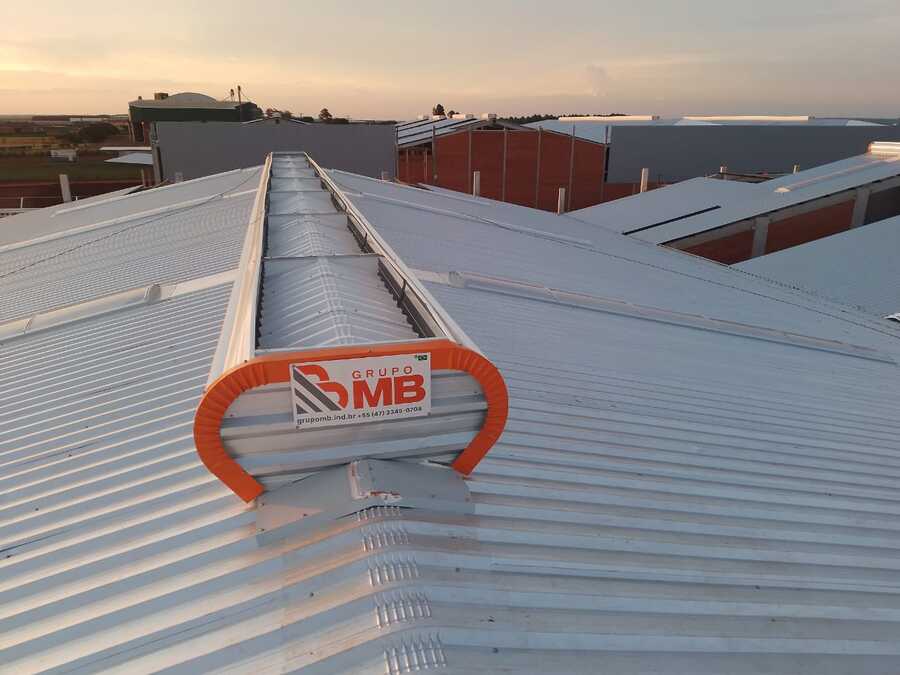
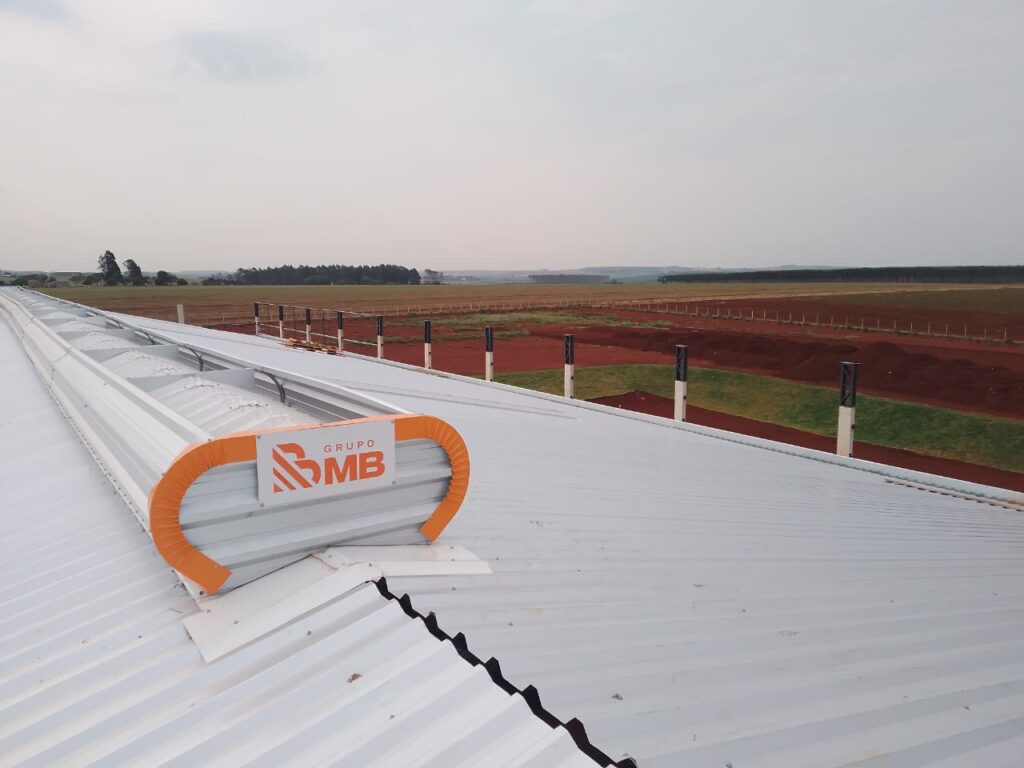
Ousheris an innovative architectural solution designed to optimizenatural ventilation, installed on the top of the roof or building. It is essential for the efficient exhaustion of accumulated hot air, operating through the venturi effect to accelerate air renewal.
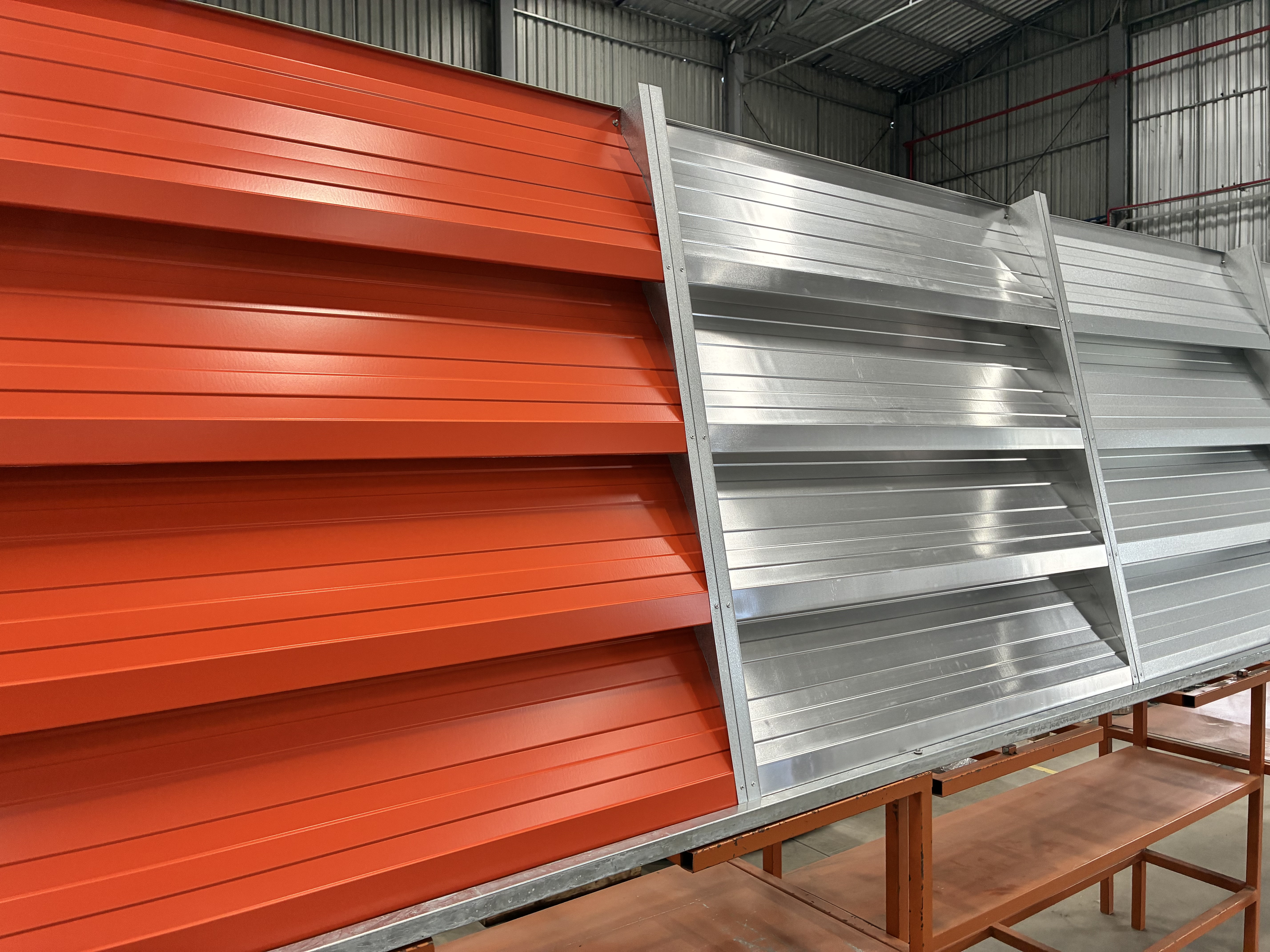
In addition to being light and easy to install, the lantern stands out for its low maintenance requirements, differentiating it from traditional hoods that require constant care and are susceptible to wear and tear.Its design allows customization in size, shape and materials, including aesthetically adaptable options, such as varied colors, offered by Grupo MB.
The louver is a ventilation structure that plays an important role in grain storage, providing significant benefits in terms ofenergy efficiency and environmental control.
General benefits of the lantern:
- savings on energy tariffs, especially in air conditioning systems;
- advantages over traditional hoods;
- customization and aesthetic adaptation (colors and materials);
- light weight and ease of installation;
- humidity control;
- pest reduction;
- low maintenance.
MB Group lantern with polycarbonate sheets:
- it is an extra option that allows the generation of natural light;
- 5 years warranty on the product;
- technical assistance throughout Brazil;
- guarantee of tightness (ensuring protection against infiltration even under adverse weather conditions);
- combination of lantern withshutters, depending on the shape of the silo, which enhances air exchange and renewal.
Adequate grain storage is essential to ensure food security, economy and sustainability. Storage innovations play a crucial role in reducing post-harvest losses and increasing efficiency in the grain supply chain.
In this context,the lantern stands out as a modern and effective solution, providing humidity control, natural ventilation, pest reduction and the option of generating natural light. The combination of louvers and shutters improves ventilation control, adapting to needs and climatic conditions.
With guaranteed watertightness and technical assistance throughout Brazil, the lantern is a reliable solution forgrain storage, contributing to preservation, food security andsustainability, benefiting producers and consumers.
Investing in modern solutions such as lanterns is essential for the agricultural sector.Contact usto learn more about the lantern!