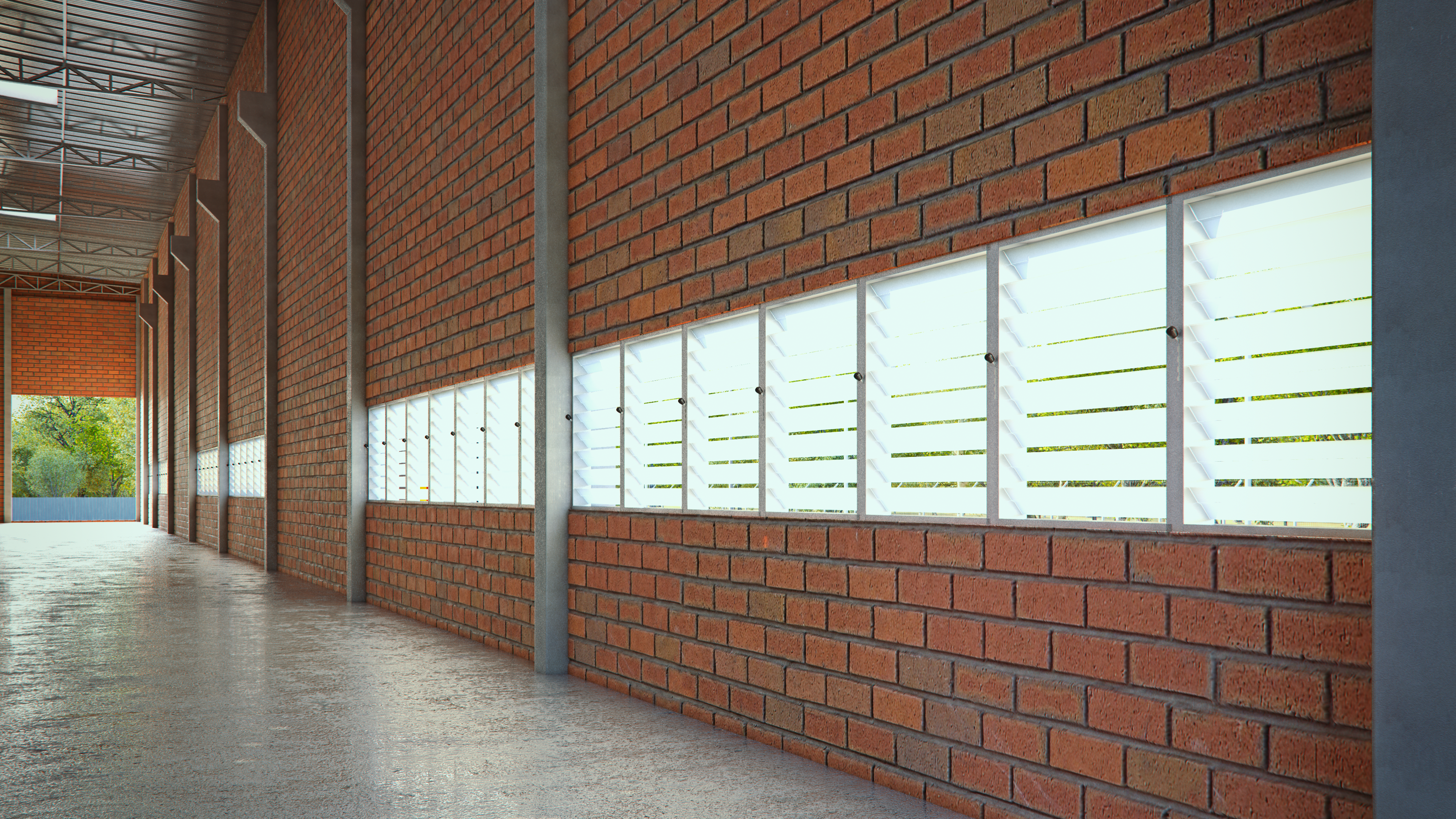
Side natural ventilation has always been part of the architecture of industrial warehouses. However, the way the industry uses this resource is changing.
Today, natural ventilation is no longer just a permanent opening on the building's facade. It started to directly influence the thermal performance of the environment, the energy efficiency of the operation and the stability of the warehouse's internal conditions, in addition to increasingly connecting to environmental control systems.
This new scenario was one of the main motivators for the development of anew generation of industrial shutters from the MB Group.
The new reality of industrial environments
Industrial warehouses have evolved significantly in recent decades. The presence of more complex machines, automated processes and continuous operations has considerably increased the internal thermal load of buildings.
As a result, factors such as air renewal and heat dissipation began to directly impact operational performance.
Today, natural ventilation is expected to contribute to:
- reduce thermal stratification
- promote air renewal in the environment
- improve the environmental comfort of production spaces
- reduce dependence on mechanical air conditioning systems
In this context, some traditional construction solutions are beginning to show limitations in the face of new industry demands.
The most common mistake when evaluating industrial shutters
Most of the comparisons made in the market are still based on simplified criteria. Normally, the analysis only considers the thickness of the sheet, the type of material used or the dimensions of the module.
Although these factors are important, they do not alone explain the structural behavior of aindustrial shutter.
The actual performance of the system also depends on aspects such as:
- distribution of efforts in the structure
- structural behavior over time
- system operational stability
- integration with other constructive solutions
As industrial environments become more demanding, these variables become increasingly relevant in the technical evaluation of solutions available on the market.
Natural ventilation and the evolution of Industry 4.0
The digital transformation of the industry does not only impact machines and production processes. It is also changing the way industrial warehouse infrastructure is designed and used.
With the advancement ofIndustry 4.0, production environments began to operate with a higher level of automation, monitoring and integration between systems. In this scenario, factors such as internal temperature, air renewal and thermal stability directly influence the operational performance and energy efficiency of industrial plants.
Natural ventilation then takes on a more strategic role within the industrial project, contributing to the environmental control of the warehouse and the stability of operating conditions.
This movement reinforces the need for ventilation solutions capable of keeping up with increasingly industrial environments.connected, automated and demanding.
Technical standards also reinforce the importance of natural ventilation
In addition to the operational demands of the industry, the ventilation of production environments is also associated withnormative guidelines aimed at the health, safety and comfort of workers.
In Brazil, different standards and regulations deal with the quality of the working environment and ventilation conditions in industrial buildings.
Among them, the following stand out:
- NR-15 – Unhealthy Activities and Operations, which addresses heat exposure limits in work environments
- NR-17 – Ergonomics, which establishes guidelines related to environmental conditions, including thermal comfort
- Technical standards ofABNT, which deal with ventilation criteria and environmental performance in buildings
In this context, natural ventilation starts to play an important role not only in the energy efficiency of warehouses, but also in thequality of working conditions within industrial plants.
As regulatory and operational requirements evolve, the need for more efficient and technically structured ventilation solutions also grows.
What motivated the development of a new generation
Changes in the industrial scenario motivated the development of a new generation of industrial shutters. More than a simple update of an existing product, the objective was to review traditional construction principles and incorporate new technical variables that could meet market demands.
Among the factors that guided the development of the new line, the following stand out:
- Balanced distribution of structural effortsto ensure greater durability and resistance
- System behavior over timeto ensure operational stability
- Integration with automation systemsfor better ventilation control
- Compatibility with the most demanding industrial environmentsthat demand innovative and robust solutions
These variables add up to new technological approaches, leading to a solution that evolves theindustrial side ventilation, considering new operational needs.
New generation features:
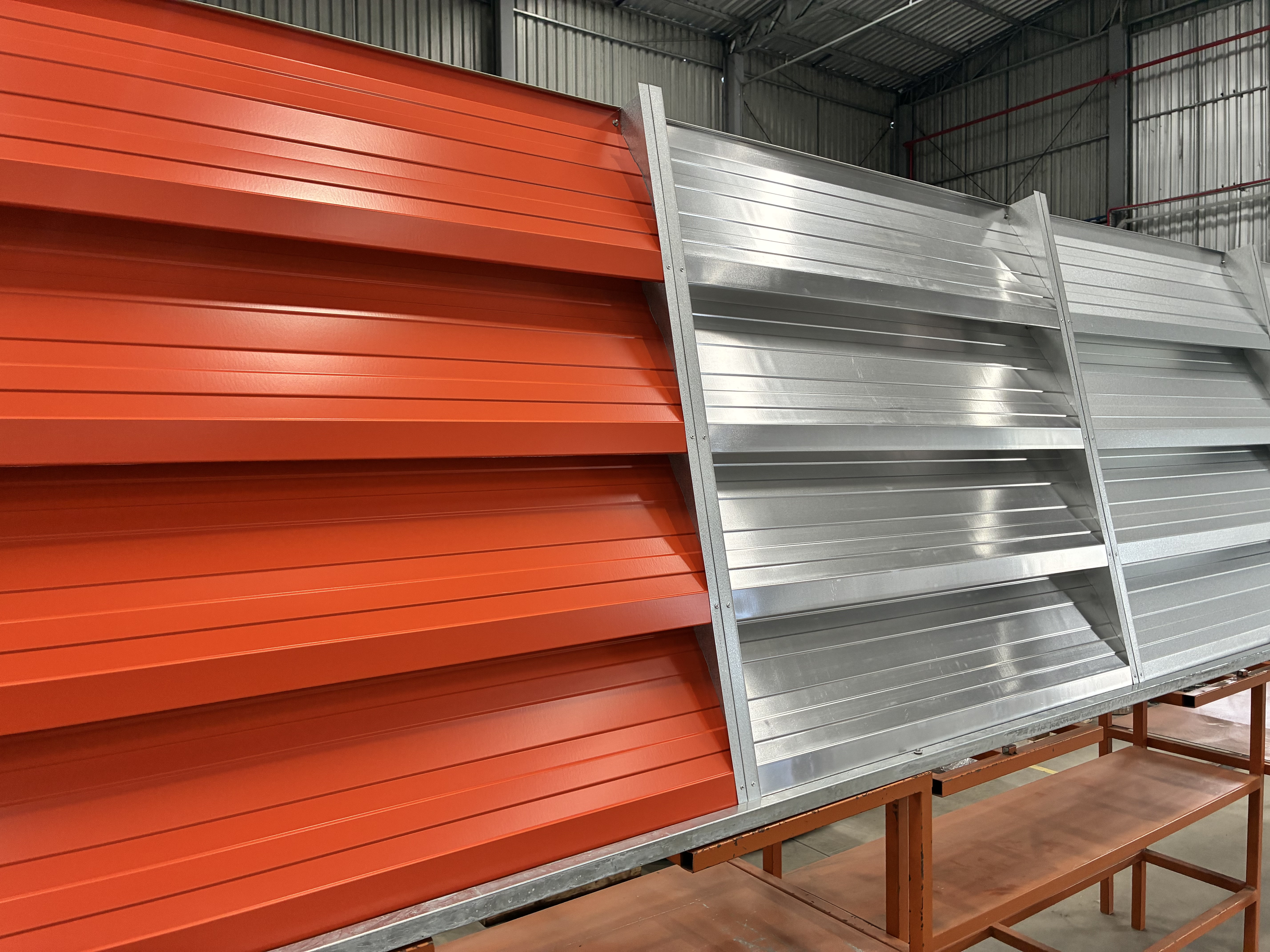
- Fin conformation: The new fin manufacturing process involves an exclusive forming process under high pressure, creating structural folds that increase rigidity, even at smaller thicknesses. This innovative design allows you to optimize the material without compromising resistance.
- Distribution of efforts: The new geometry of the fins guarantees a balanced distribution of structural forces, increasing stability over time and providing greater durability.
- Greater mechanical resistance: The new line was designed to withstand more rigorous operational demands, with a focus on safety and longevity, even in systems that require frequent fin movement.
- Integration with automated systems: The new solutions were developed to be compatible with automated industrial operations, offering a technological solution that easily integrates with control and automation systems.
These differences guarantee a more effective lateral ventilation solution, in line with market trends, which require greater efficiency, durability and integration with automated systems in industrial warehouses.
In the coming days, Grupo MB will present this new solution to the market, which establishes a new standard of innovation and efficiency in industrial ventilation.