Abril Verde reinforces a point that, in practice, those in charge of the operation already know: safety does not just depend on standards, it depends on real environmental conditions.
Over the years, the industry has evolved in processes, technology and control. But there is one factor that still directly impacts the operational routine and often does not receive the same attention: the environment where everything happens.
Because, in practice, it is not enough to have well-defined procedures if the conditions under which they are carried out compromise the team's performance and increase exposure to risk.
👉 Today, the environment is supporting or hindering your operation
This is a rarely asked question, but a decisive one. When the environment is not adjusted, the operation loses efficiency, the team suffers wear and tear and risks increase even if everything is, theoretically, within the norm.
Green April: the role of the environment in the safety of industrial operations
Abril Verde reinforces the importance of health and safety at work, bringing visibility to standards, processes and accident prevention.
Within this context, it is important to expand the way in which safety is understood in industrial operations.
Not just to meet regulatory requirements, but to build real conditions that support operations with stability, efficiency and well-being.
In practice, operational performance is already directly linked to several technical and regulatory guidelines, including those related to the environment.
However, not all factors receive the same level of attention on a daily basis.
Aspects such as the use of PPE, machine safety and operational procedures are usually treated with high rigor.
Environmental conditions, such as ventilation, thermal comfort and air renewal, although they are also provided for in standards, are not always prioritized with the same intensity.
It is at this point that a less evident risk arises, but is highly relevant to the operation.
The analysis stops being just whether the environment is compliant, and starts considering whether it is, in fact, suitable to support the production routine with safety and predictability.
Because when the environment:
- increases team burnout
- reduces the ability to concentrate
- requires frequent breaks
- increases energy consumption
- generates operational instability
it directly influences the performance of the operation.
Even when, from a formal point of view, the minimum requirements have already been met.
The invisible cost of an inadequate industrial environment
This is the type of impact that rarely appears explicitly in operational reports, but which directly influences the cost, productivity and predictability of the operation over time.
When the environment is not adequate, the problem does not arise as an isolated event, but as a sequence of small losses that accumulate daily.
These losses are reflected in:
- increase in absences
- drop in productivity per hour worked
- higher incidence of operational errors
- physical and mental exhaustion of teams
- indirect cost increase
These impacts are rarely registered as structural failure, but they clearly appear in the form of instability, rework and constant pressure on the operation.
In the end, the environment stops being neutral and starts to act against efficiency.
Excessive heat in industry: when the environment compromises safety
The heat inside the warehouse is not just discomfort, it is a variable that directly impacts the performance of the operation.
As the hours pass, the environment accumulates thermal load, reducing the team's physical and cognitive capacity and affecting the consistency of work.
This scenario directly affects:
- the concentration
- the response time
- physical resistance
- decision making
And here there is a critical point: heat changes behavior.
Teams under thermal stress tend to experience greater fatigue, less precision and reduced reaction capacity.
👉 In industrial environments, this means a real increase in risk.
Ventilation and air renewal: safety that sustains operation
In many industrial warehouses, the problem is not a lack of equipment, it is a lack of efficient air renewal.
When the environment does not promote adequate air renewal, the impact is not immediate, but manifests itself throughout the shift through a drop in performance and increased wear and tear.
Environments with low ventilation have:
- constant feeling of stuffiness
- low air circulation
- continuous discomfort
- progressive reduction of attention
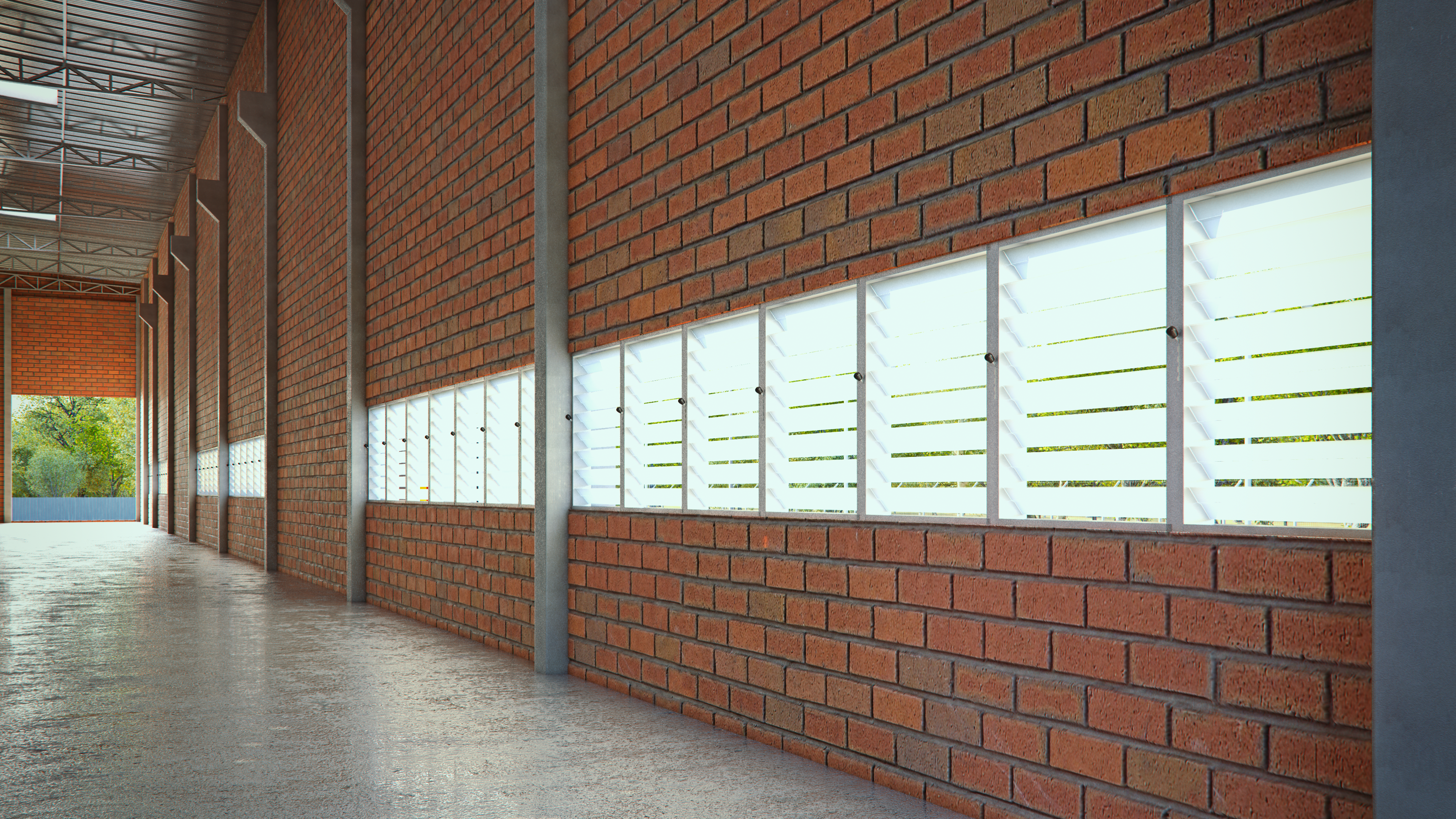
A natural ventilation for industrial warehouseallows constant air renewal, reduces thermal load and improves working conditions.
👉 The operation starts to pay continuously for a structural problem.
Standards and reality: where security cannot be resolved on paper alone
Regulatory standards are fundamental for establishing a minimum safety standard within industrial operations, organizing processes, defining responsibilities and creating an important basis for prevention.
However, there is a clear limit that often goes unnoticed: standards alone do not correct structural problems in the environment.
Even with compliance with standards such as:
- NR-15 (unhealthiness)
- NR-17 (ergonomics)
- NR-35 (work at height)
If the environment continues to present excessive heat, poor ventilation or inadequate conditions, the risk remains present in day-to-day operations.
In practice, this means that many industries operate within the norm, but still face performance difficulties, team burnout and operational instability. This happens because the standard itself already considers factors that impact the performance of the operation, but, in practice, the prioritization of these requirements is not always balanced, especially when it comes to environmental conditions.
Direct impact on industrial productivity
Safety and productivity are directly connected variables within industrial operations, although they are still treated as independent fronts in many contexts.
In practice, the environment exerts a continuous influence on team performance and the stability of the production process.
When conditions are not adequate, especially in relation to ventilation and thermal comfort, productivity does not suffer an abrupt drop, but rather a progressive degradation throughout the shift.
This effect is silent, but consistent, and manifests itself on different fronts of the operation:
- reduction in productivity per hour worked
- increase in the time required to carry out activities
- greater need for breaks throughout the shift
- drop in consistency and operational rhythm
- increased variability in results
As it is not an immediate impact, this type of loss usually goes unnoticed in the short term.
However, over time, it directly compromises the cost per production, the predictability of the operation and the delivery capacity.
Energy efficiency: the financial impact of the environment
Industrial environments with inadequate ventilation naturally tend to compensate for this deficiency through artificial systems, such as air conditioning and continuous mechanical ventilation.
This type of solution resolves the symptom in the short term, but creates a structural dependency that directly impacts the efficiency of the operation over time.
In practice, this translates into:
- continuous increase in energy consumption
- increase in recurring operating costs
- greater wear and tear and need for equipment maintenance
- reduction in overall system efficiency over time
- lack of solution to the root cause of the thermal problem
👉 In other words, the operation starts paying continuously for a problem that could be resolved at the source.
Industrial retrofit: correcting without long breaks
A large part of current industrial operations takes place in already consolidated structures, often designed for a production scenario different from the current one, with lower thermal load, lower operational intensity or simpler technical requirements.
With the increase in productivity, occupancy and process demands, these structures begin to present limitations that were not foreseen in the original project, directly impacting thermal comfort, ventilation and, consequently, the safety and efficiency of the operation.
In this context, industrial retrofit emerges as a strategic approach to correct these deficiencies without the need for reconstruction or major pauses in operation.
In practice, it allows:
- improve ventilation and air renewal in the environment
- reduce the thermal load accumulated in the warehouse
- increase the level of security of operational activities
- readjust the environment to current production requirements
- optimize performance without compromising operational continuity
More than an adaptation, the retrofit acts as a structural correction of the environment.
👉 Instead of adjusting the operation to space limitations, you adjust the space to support the operation with more efficiency, safety and predictability.
Work at height: when the structure defines the risk
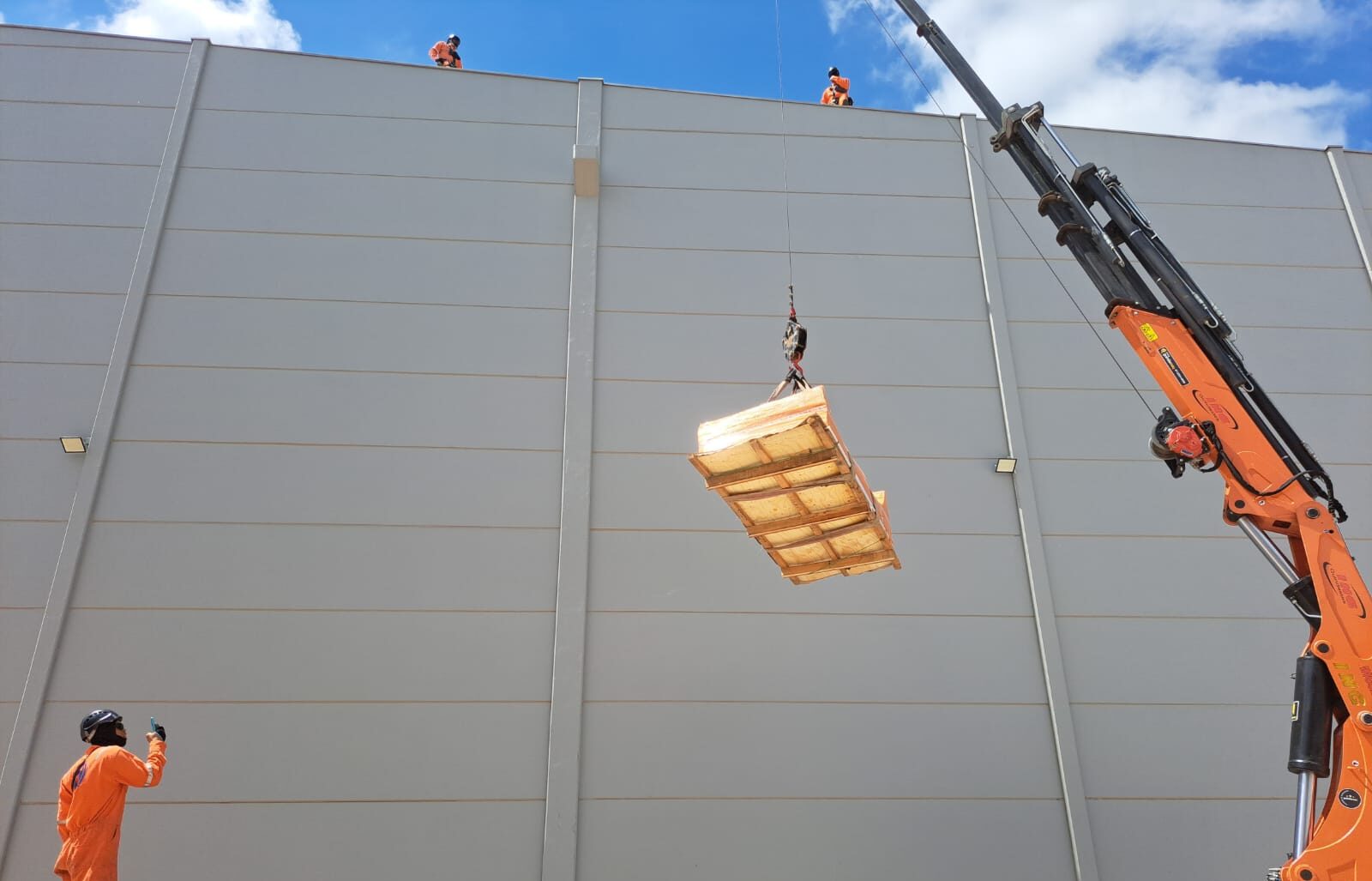
Activities at height are part of the industrial routine, especially in maintenance and inspections on roofs and elevated structures.
The problem is that, when these activities are not considered in the environmental design, they end up being carried out in an adapted way, often with improvised or temporary solutions, which significantly increases the level of risk and reduces operational control.
In practice, this is reflected in:
- insecure and poorly standardized access
- use of improvised solutions for anchoring
- lack of predictability in execution
- dependence on emergency interventions
- greater team exposure to critical risks
Therefore, safety at height needs to be treated as part of the structure, and not as an adaptation.
Solutions likeindustrial lifelineallow you to standardize access, increase control and consistently reduce risks.
Solutions that transform the industrial environment
When safety is treated as part of the structure, the environment stops being a constant risk and starts working in favor of the operation.
For those involved in the industry on a daily basis, this means less improvisation, less emergency correction and more predictability in the environment's performance.
In practice, this involves solutions that act directly on the causes of problems:
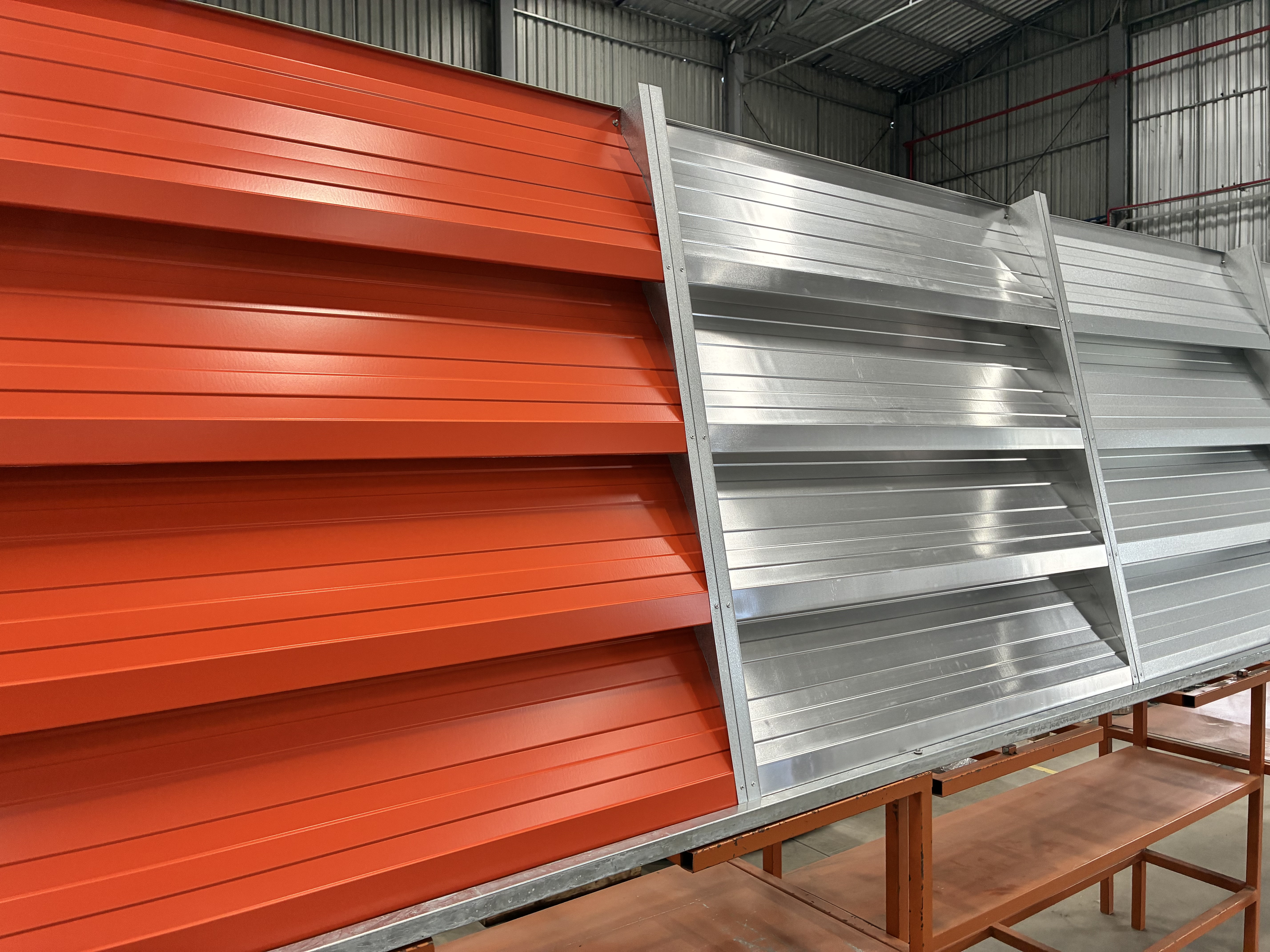
🔹 Natural ventilation:
They promote efficient side ventilation, reduce internal heat and improve the air flow in the environment.
🔹 Air exhaust:
Generates air exchange, expelling hot pockets of air and improving the thermal balance of the warehouse.
🔹 Natural lighting:
Up to 8 hours of natural lighting, reducing energy consumption and improving operational comfort visually.
🔹 Lifeline:
Ensures permanent safety in activities at height, eliminating operational risks.
👉 When applied in an integrated manner, these solutions increase the level of security, efficiency and control of the operation.
Indicators that show that the environment has become a problem
Some signs indicate that the environment is already impacting the operation:
- increase in absenteeism
- productivity variation
- high energy consumption
- complaints about heat
- increase in operational failures
👉 These indicators show that the problem has already left comfort and entered performance.
The role of the environment in industrial performance
Occupational safety cannot be sustained solely by procedures when the environment does not offer adequate conditions.
The operational context where activities take place is one of the main determinants of the actual level of security.
A well-structured environment contributes to:
- reduce errors
- improve performance
- increase thermal comfort
- stabilize the operation
Ignoring the environment means ignoring one of the main security variables.
Checklist: the environment is compromising your operation
Respond carefully:
- The environment is hot for most of the day
- There is a feeling of constant suffocation
- The team experiences fatigue throughout the shift
- Energy consumption is high
- Difficulty maintaining constant productivity
- Work at height does not have roof access equipment
👉 If you answered “yes” to several points, the environment is already impacting your operation.
FAQ – Safety in industrial work
1. Security depends only on standards
No.
The standards already address several factors that impact safety and performance, including environmental conditions. However, in practice, not all of these requirements receive the same level of attention and aspects such as ventilation and thermal comfort often end up being underestimated compared to other items, such as PPE and machine safety.
2. How to improve ventilation in an industrial environment with excessive heat
The ideal is to analyze how the air circulates in the warehouse and identify points of heat accumulation. Based on this, solutions such as industrial shutters for side ventilation and exhaust louvers help create continuous air flow, reducing the temperature and improving the environment.
3. It is worth investing in ventilation and natural lighting in industry
Yes, mainly due to the long-term impact. These solutions reduce energy costs, improve thermal and visual comfort and reduce dependence on artificial systems, making operations more efficient.
4. What to consider when choosing the best ventilation solution for a warehouse
The choice depends on the behavior of the environment, including heat generation, type of coverage and the need to control ventilation. Each project requires a specific solution, aligned with efficiency and performance objectives.
5. It is possible to apply louvers, domes or lifelines to any type of roof
In most cases, yes. These solutions can be adapted for different coverages, as long as there is a technical analysis to guarantee compatibility, sealing and performance over time.
6. Work safety depends only on compliance with standards
No. The standards already include environmental factors, but in practice, not everyone receives the same level of attention, and aspects such as ventilation and thermal comfort end up being underestimated.
Green April: security as a strategy
Abril Verde reinforces awareness about health and safety at work, highlighting the importance of standards and processes as the basis of safe operations. These standards already cover factors that directly impact performance, including environmental conditions. However, in practice, not all of these aspects receive the same level of attention and it is at this point that the environment begins to require a more technical and strategic look within the operation.
Operating procedures achieve their best performance when environmental conditions also support safe and efficient operation.
The environment today is helping or limiting your operation
This is a rarely asked but decisive question: when the environment is not adjusted, the operation loses efficiency, the team suffers wear and tear and risks increase, even with everything apparently within the norm.
When well planned, the environment stops being a problem and starts to directly contribute to the stability, performance and safety of the operation.
If you want to understand how to improve your operating environment:
👉 Identify invisible risks
👉 Assess your ventilation level
👉 Discover efficiency opportunities
Talk to an expert and transform your industrial environment.