When the subject isnatural lighting in industrial environments, many designers and budgeters face a recurring question:use translucent tiles or invest in a continuous system like Domus Linealight
Although tiles seem more economical at first glance, the truth is that the real cost-benefit goes far beyond the initial price. In this article, we will present themain technical differences of Domus Linealight, in addition to comparing its performance with common translucent tiles – all based on data from the sector itself.
Why Domus Linealight is the right choice for industrial warehouses
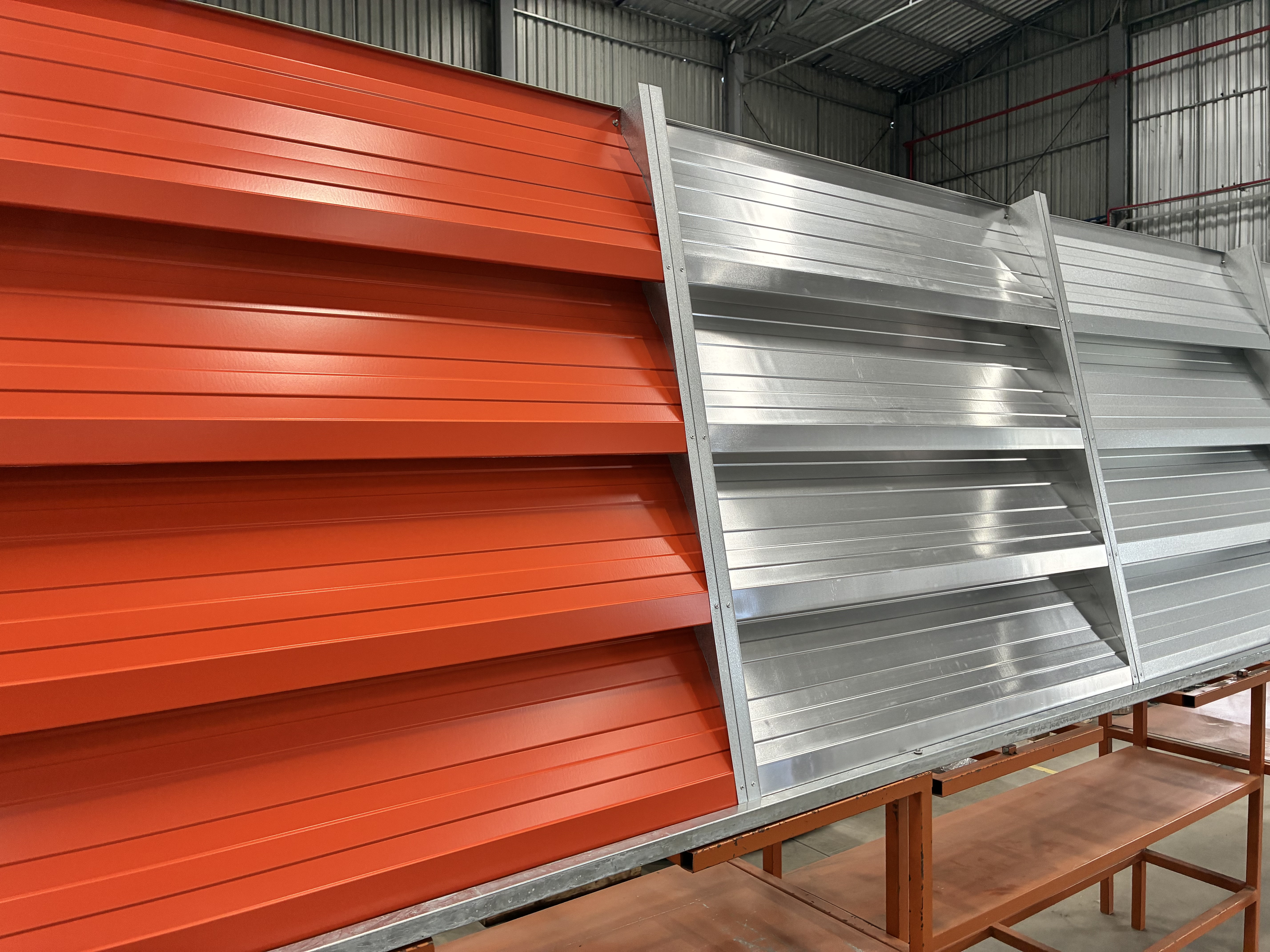
O MB Group Domus Linealightis a continuous natural lighting system, developed especially for warehouses and industrial structures that seek efficiency, durability and thermal comfort. Manufactured withhigh performance prismatic polycarbonate, it guarantees a uniform distribution of natural light and significant electricity savings.
✅ Technical differences that make a difference
1. Smart fixing (no screws on polycarbonate sheets)
While conventional systems perforate the polycarbonate – creating a risk of infiltration due to thermal expansion – Domus MB fixes the material only to the steel sheets. Thatprevents leaksand increases the useful life of the structure.
2. Original material, no thermoforming
The sheets used maintain their original optical and mechanical properties. As they are not thermoformed, there is no distortion, loss of strength or change in the structure of the material. The result is a product withwarranty up to 10 years, direct from the polycarbonate supplier.
3. Diffuse, glare-free lighting
Thanks to prismatic polycarbonate with more than26 thousand microprisms per m², Domus Linealight provides soft and continuous lighting, avoiding hot spots, marked shadows or glare. The work environment becomes more productive and comfortable.
4. High durability and low maintenance
Unlike more fragile solutions, Domus resists prolonged sun exposure, impacts and climate variations, reducing the need for corrective maintenance.
Comparison: Domus Linealight vs. Translucent Tiles
If the goal is to invest smartly, it's important to compare more than just the initial price. See how each solution performs over time:
| Criterion | Translucent Tiles | Domus Linealight – MB Group |
|---|---|---|
| Light distribution | Punctual, generates poorly lit areas | Uniform and continuous, ideal for large areas |
| Thermal comfort | Creates hot spots and glare | Prevents glare and reduces internal heat |
| Durability | It can dry out, turn yellow and break easily | High resistance and factory warranty |
| Maintenance | High frequency of changes and repairs | Stable system with low maintenance |
| Real cost-benefit | Initially cheap, but with recurring costs | Investment with proven return |
Translucent tiles are actually more economical
Not necessarily. Many customers opt for translucent tiles believing they are saving money, but end up paying for:
- Frequent maintenance due to early wear
- Poor light distribution (requiring artificial lighting)
- Excessive heat that compromises productivity in the environment
Already with theDomus Linealight, energy savings and environmental comfort pay off the investment in the first years of use, withpractical and technical teststo support the customer's decision.
Conclusion: choose efficiency and security for your project
If your objective is to create an industrial project with technical performance, durability and proven economy, theMB Group Domus Linealightis the ideal solution. Not only does it outperform translucent tiles in every technical aspect, it also offers engineering backing, warranties and expert support.