Why natural lighting and ventilation are essential for ESG certification
Business sustainability has evolved from a trend to a strategic necessity. With 75% of companies still without sustainability and ESG certification, there is a window of opportunity for industries that want to lead sustainable transformation and attract qualified investments.
But how to start an efficient ESG journey without compromising budget or operations? The answer lies in the integrated implementation oflighting andindustrial natural ventilation– solutions that offer immediate returns and measurable impact on sustainability indicators.
What is ESG and why it matters for your industry
ESG (Environmental, Social and Governance)represents criteria used by investors to evaluate a company's commitment to environmental sustainability, social responsibility and corporate governance.
For industries, ESG means:
- Environmental: Reduction of carbon emissions, energy efficiency, resource management
- Social: Safe and healthy work environment, employee well-being
- Governance: Transparency, business ethics, responsible management
Industrial Natural Lighting: Much Beyond Energy Savings
How natural lighting works in industrial environments
A industrial natural lightinguses specialized systems such as translucent domes, transparent tiles, sheds and skylights to capture and distribute sunlight in a controlled and efficient way in production environments.
Quantifiable benefits of natural lighting:
1. Reduction in Energy Consumption
- Savings of up to60% on lighting costs
- Decrease in energy demand during peak times
- Direct reduction in industrial carbon footprint
2. Impact on Sustainable Development Goals (SDGs)
- SDG 7– Clean Energy: Less dependence on electricity
- SDG 8– Decent Work: Healthier working environment
- SDG 12– Responsible Consumption: Efficient use of natural resources
3. Benefits for Employees
- Improved visual quality and reduced eye fatigue
- Increased concentration and productivity
- Reduction of work accidents
- Improved overall team well-being
Industrial Natural Ventilation: The Perfect Complement for Sustainability
What is natural ventilation and how it impacts ESG
A industrial natural ventilationremoves excessive heat, humidity and pollutants from the air through systems that take advantage of differences in temperature and pressure, without consuming electrical energy.
Main natural ventilation systems:
1. Wind Fans
- They work with wind energy
- Continuous renewal of indoor air
- Zero electricity consumption
2. Natural Exhaust Fans
- Removal of hot air and vapors
- Natural room temperature control
- Reduction of thermal load
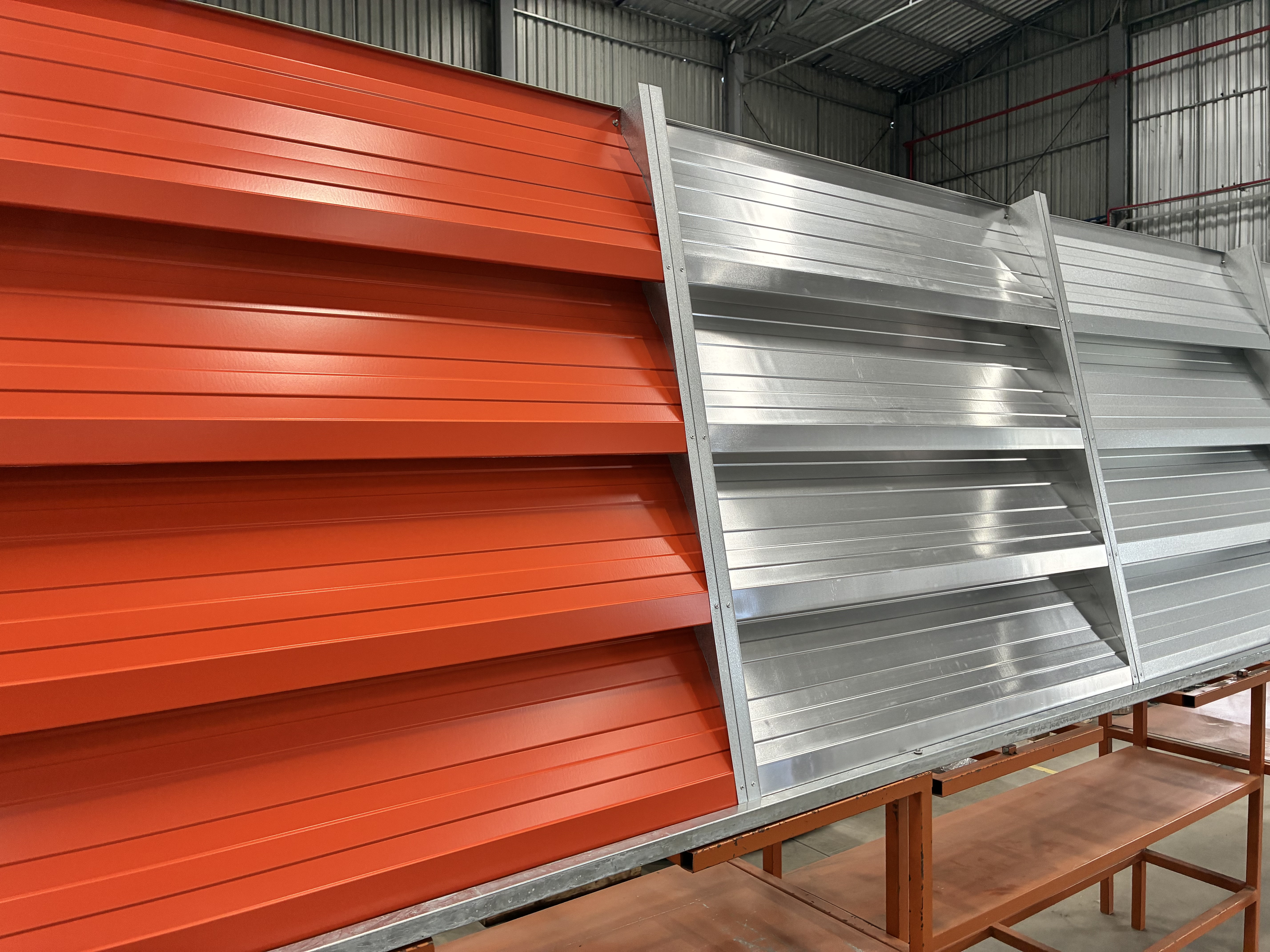
3. Automated Shutters
- Intelligent ventilation control
- Adaptation to climatic conditions
- Optimization of thermal comfort
How natural ventilation contributes to ESG certification:
Environmental Aspect (E)
- Reduction in energy consumption: Natural ventilation systems can reduce up to 40% of air conditioning costs
- Reduction of CO₂ emissions: Less dependence on mechanical systems
- Resource efficiency: Exploitation of natural phenomena
Social Aspect (S)
- Indoor air quality: Constant renewal reduces concentration of pollutants
- Thermal comfort: More pleasant working environment
- Occupational health: Reduction of respiratory diseases and heat stress
Governance Aspect (G)
- Transparency in results: Clear energy saving metrics
- Regulatory compliance: Compliance with health standards
- Responsible management: Investment in sustainable solutions
Integration of Lighting and Natural Ventilation: Synergy for Maximum ESG Results
How combining natural lighting and ventilation maximizes ESG impact
A integration of natural lighting and ventilation systemscreates an optimized industrial environment that:
- Maximizes energy efficiency: Simultaneous reduction in energy consumption for lighting and air conditioning
- Significantly improves employee comfort: Well lit and ventilated environment
- Offers robust data for ESG reporting: Consolidated sustainability metrics
ROI of the combination of natural lighting and ventilation:
- Total energy savings: 50-70% reduction in operating costs
- Payback: Between 12-24 months
- Asset valuation: Increase in industrial real estate value
- Certifications: Top score in LEED, BREEAM and other certifications
Strategic Implementation: Step by Step for ESG Certification
Phase 1: Diagnosis and Planning
- Energy audit: Analysis of current energy consumption
- Structural assessment: Installability check
- Feasibility study: Calculating ROI and ESG benefits
- Goal setting: Establishment of performance indicators
Phase 2: Design and Sizing
- Lighting project: Calculation of required natural lighting
- Ventilation design: Dimensioning of air renewal systems
- Smart integration: Systems automation and control
- Regulatory compliance: Compliance with technical regulations
Phase 3: Installation and Commissioning
- Professional installation: Execution by specialized team
- Performance tests: Validation of projected results
- Team training: Training for operation and maintenance
- ESG Documentation: Registration of metrics and benefits
Case Studies: Real Results of Natural Lighting and Ventilation
Food Sector: 65% Reduction in Energy Consumption
A food industry implemented an integrated natural lighting and ventilation system, resulting in:
- 65% savingson the energy bill
- 40% improvementin employee satisfaction rates
- LEED Gold Certificationto the manufacturing unit
Automotive Sector: More Productive and Sustainable Environment
Automotive manufacturer invested in ventilation and natural lighting solutions, obtaining:
- 50% reductionin air conditioning costs
- 25% increasein productivity
- ISO 14001 Certificationfacilitated by ESG indicators
ESG Certifications and Recognitions Through Natural Lighting and Ventilation
LEED (Leadership in Energy and Environmental Design)
- Energy and atmosphere credits: Reduction in energy consumption
- Internal environmental quality credits: Natural lighting and ventilation
- Innovation credits: Integrated and efficient solutions
BREEAM (Building Research Establishment Environmental Assessment Method)
- Energy Category: Energy efficiency and renewable sources
- Health and Wellbeing Category: Quality of the indoor environment
- Category Management: Sustainable operating practices
Other Relevant Certifications:
- ISO 50001: Energy management
- ISO 14001: Environmental management
- AQUA-HQE: High environmental quality
Emerging Technologies: The Future of Natural Lighting and Ventilation
Intelligent Automation
- Brightness sensors: Automatic adjustment according to external light
- Smart climate control: Ventilation responsive to environmental conditions
- industrial IoT: Real-time monitoring via the internet of things
Advanced Materials
- Smart glasses: Automatic control of light transmission
- Insulating materials: Higher thermal efficiency
- Self-healing coatings: Less maintenance required
Return on Investment: Calculating ESG Benefits
Direct Financial Benefits
- Reduction in energy bill: R$X per month in savings
- Tax incentives: Benefits for sustainable companies
- Green financing: Access to special credit lines
- Share appreciation: ESG premium on share value
Intangible Benefits
- Talent attraction: Professionals prefer sustainable companies
- Corporate reputation: Strengthening the brand
- Access to markets: Partnerships with ESG-friendly companies
- Risk mitigation: Lower exposure to regulatory changes
Natural Lighting and Ventilation for ESG FAQ
How much does it cost to implement natural lighting and ventilation
The investment varies depending on the size and complexity of the installation, but the typical ROI occurs between 12-24 months through energy savings.
Works in any type of industry
Yes, systems can be adapted to different industrial sectors, considering specificities such as temperature, humidity and air quality control.
How to measure the ESG impact of these solutions
Through metrics such as: kWh saved, tons of CO₂ avoided, employee satisfaction rates and certification scores.
Next Steps: How to Start Your ESG Journey
1. Free Initial Trial
Request a preliminary audit to identify opportunities for improvement in natural lighting and ventilation.
2. Custom Design
Development of a customized solution for your specific needs and ESG goals.
3. Gradual Implementation
Possibility of implementation in phases, allowing investment to be distributed over time.
4. Monitoring and Optimization
Continuous monitoring of results and adjustments to maximize ESG benefits.
Conclusion: Lead the Sustainable Transformation of Your Industry
The integration ofnatural lighting and ventilation systemsIt represents more than a technological modernization – it is a strategic positioning for the future of business.
In a market where sustainability determines access to capital, commercial partnerships and talent attraction, investing insolutions forindustrial energy efficiencyputs your company at the forefront of ESG transformation.
The benefits are immediate and measurable: reduced operational costs, improved work environment, strengthening corporate reputation and easier access to international certifications.
The time to act is now.While 75% of companies are still defining their ESG strategies, you could be implementing solutions that generate real results and position your industry as a benchmark in sustainability.
MB Group has more than two decades of experience innatural lighting and ventilation solutions for industries. Our expertise transforms industrial environments into more efficient, sustainable and productive spaces, directly contributing to the success of your ESG strategy.
Contact usand discover how our technology can accelerate your journey towards ESG certification and leadership in industrial sustainability.