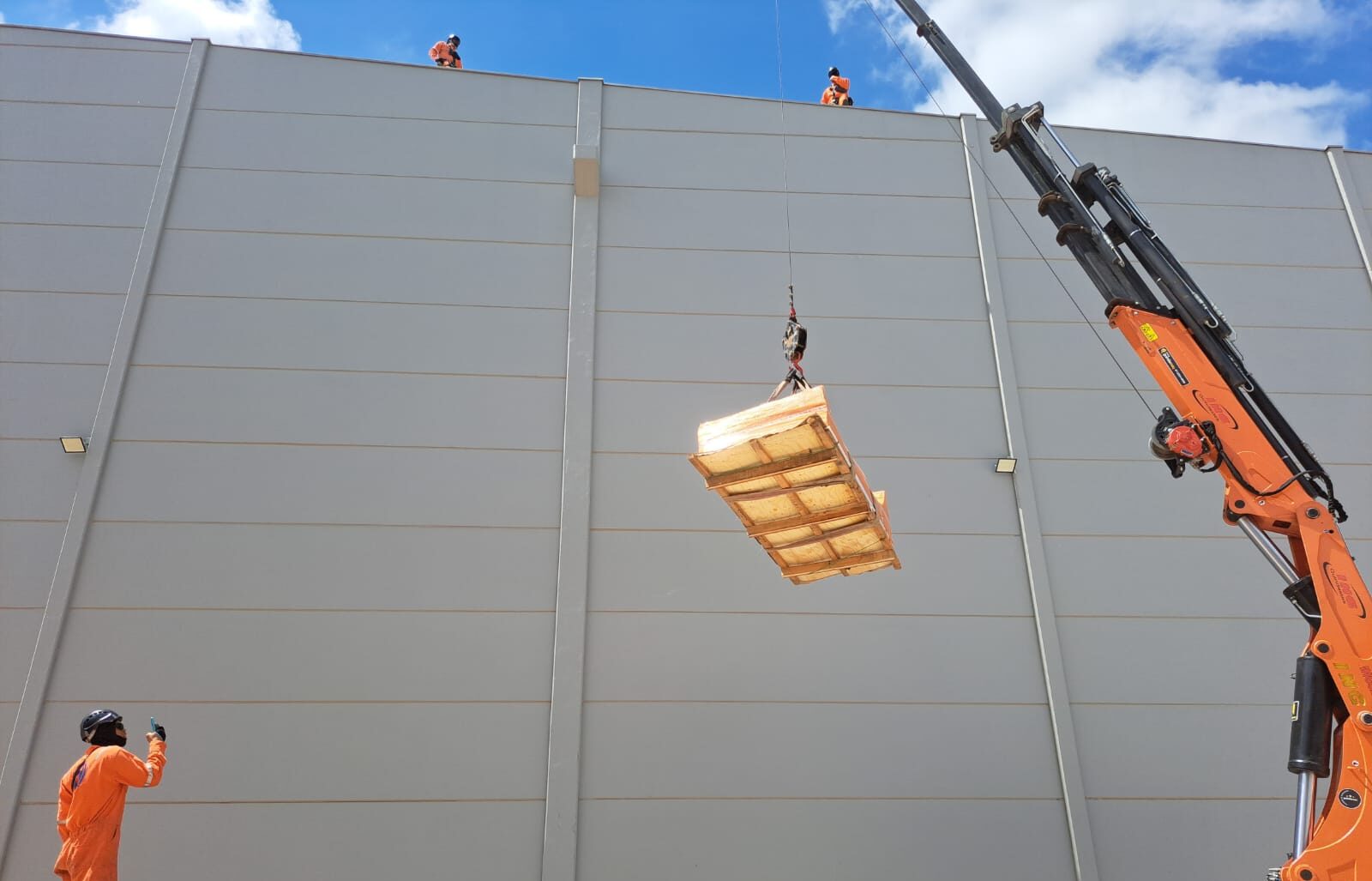
Work carried out at height, such as on ceilings, scaffolding and elevated structures, presents significant risks. However, these jobs are especially dangerous due to the possibility of falls, which can have serious consequences. Therefore, it is crucial to follow regulations that protect workers. In this sense, Regulatory Standard N° 35 (NR 35) establishes clear guidelines to protect workers in these situations. One of the most effective systems to reduce risks is the line of life.
Next, we will explore in detail the importance of the line of life, how it contributes to safety at height and how its implementation must strictly comply with NR 35, guaranteeing the protection of workers at all times.
What is a Line of Life
The life line is a collective protection system made up of steel cables or other resistant materials, connected to strategically located anchor points. These points, in turn, allow the fixation of the worker's safety harness, which prevents falls during movement in elevated places, such as roofs, floors or industrial structures. In this way, continuous protection is ensured, minimizing the risk of accidents.
Components of the Line of Life
A life line is made up of several essential components that must comply with specific safety standards. Firstly, it includes:
- Fireproof galvanized steel cable, which offers resistance and durability.
- Anchor points every 15 meters, to guarantee safety during movement.
- Tensor at the ends, which adjusts the tension of the system.
- Braces and shoes at all connection points or the beginning/end of the system, ensuring stability.
- Impact absorber on the extremities, which helps reduce damage in the event of a fall.
- Sealed at all anchor points, to avoid any type of deterioration that could compromise safety.
Therefore, each component has a specific role that works together to provide the maximum security possible.
Types of Lifeline
There are different types of lifelines, each suited to different applications. In this way, effective protection can be guaranteed in different work situations:
Temporal Life Line
This type of lifeline is ideal for temporary applications, such as civil construction projects or industrial maintenance. It could be:
- Horizontal: Made up of straps or cables that allow lateral movement, ideal for working on scaffolding.
- Vertical: Includes anti-fall chains or rails for upward and downward movements, mainly used in elevators and towers.
Fixed Life Line
The fixed life line is designed for continuous use in places such as buildings and industrial buildings. It is more durable and resistant to climatic conditions. Among its types are:
- Fixed horizontal: For linear layouts in specific places, such as industrial buildings.
- Fixed vertical: Commonly used on metal ladders or towers, providing constant security.
When should you use Línea de Vida
According to NR 35, the life line must be used in any activity that takes place more than 2 meters from the lower level, whenever there is a risk of falling. Some examples of applications where its use is essential include:
- Tech maintenance.
- Works on scaffolds and ladders.
- Installation of electrical systems on poles or towers.
- Cleaning of industrial structures, where workers must be protected at all times.
Therefore, its implementation is essential in a variety of work, guaranteeing protection and compliance with legislation.
Implementation of a Lifeline in accordance with NR 35
To ensure that the life line complies with regulations and provides effective protection, it is necessary to follow a rigorous process that includes several phases. Next, we will see how to carry out a suitable installation:
Diagnosis and Technical Project
Before installation, a complete assessment of the surroundings and the risks involved must be carried out. Furthermore, it is important to size the lifeline in accordance with NR 35 and ABNT NBR 14606, to ensure that all safety parameters are covered.
Installation and fixing
The installation must be carried out by qualified professionals, positioning the anchor points strategically, always respecting the integrity of the structure. For example, in zipped ceilings, piercing should be avoided so as not to compromise the ceiling structure. Likewise, the cables must be connected safely with tensioners and impact absorbers.
Testing and Certification
It is essential to carry out load tests to check the resistance of the structure and ensure that the lifeline supports the weight and working conditions. Only after the tests, you must proceed with the certification of the system, to ensure its compliance with current regulations.
Training of Employees
Likewise, to ensure that workers use their lifeline correctly, it is essential to carry out complete training. This training must include the appropriate use of Individual Protection Equipment (PPE), emergency drills and risk analysis.
Inspection and Maintenance of the Line of Life
The lifeline must be inspected regularly to ensure that it is in optimal operating condition. The main occasions for inspection include:
- Before first use.
- After modifications or significant impacts.
- Periodically, every 12 months, to check the general condition.
During the inspection, the following are reviewed:
- The integrity of cables and anchor points.
- The presence of corrosion or wear.
- Compliance with current safety standards.
Compliance with NR 35
NR 35 establishes essential requirements to guarantee safety when working at height. These include:
- Carrying out a previous risk analysis to evaluate the surrounding conditions.
- The mandatory use of Collective Protection Equipment (EPCs) and Individual Protection Equipment (EPIs), such as harnesses with energy absorbers.
- Supervision by trained professionals, to ensure that all procedures are followed correctly.
- Periodic inspection and certification of the Fall Protection System (SPCQ).
In short, NR 35 guarantees that work at heights is carried out safely, minimizing risks and ensuring the integrity of workers.
Why invest in Línea de Vida
Investing in a way of life will also have to comply with a legal requirement: it is a crucial step to guarantee the safety of workers at height. This system significantly reduces the risk of fatal accidents and provides effective protection during activities. Furthermore, the adequate implementation of the soil life line ensures the protection of employees, which also avoids fines and sanctions for non-compliance with regulations.
Conclusion
The life line is an indispensable element for working at heights. Its correct implementation, complying with NR 35, on the ground protects employees, which also ensures safety in any project. If you are looking for a reliable solution, Grupo MB offers customized and certified systems, guaranteeing quality and compliance with technical standards. Don't leave security until later! Protect your team and your project now.
Haz click hereand know about a success story with Línea de Vida