The adoption of habits focused on sustainability is reflected in the most diverse sectors, including civil construction, making sustainable architecture gain strength and become arulein constructions.
In this way, sustainable architecture seeksminimize resource utilizationin works, in addition to reducing impacts to the environment and health as much as possible.
This article brings6 important tips to enable the use of sustainable architecture in your work. Check it out!
1. Include sustainability in your planning
Sustainable projects must promote comfort, causing the least possible environmental impact. They also need to have low running and maintenance costs throughout their useful life.
To achieve this level of intelligence in a project, first and foremost, planning is necessary.Well-detailed projects prevent waste in the works and guarantee better execution and results.
It is essential that practices for sustainability in architecture are considered from the beginning of the project, considering the various existing sustainability criteria.
Evenasimple actions, how to define a method ofcorrect disposal of construction waste, can become very beneficial behaviors for the environment. If there is the possibility of recycling these materials, the attitude will be even more positive.
2. Use natural ventilation
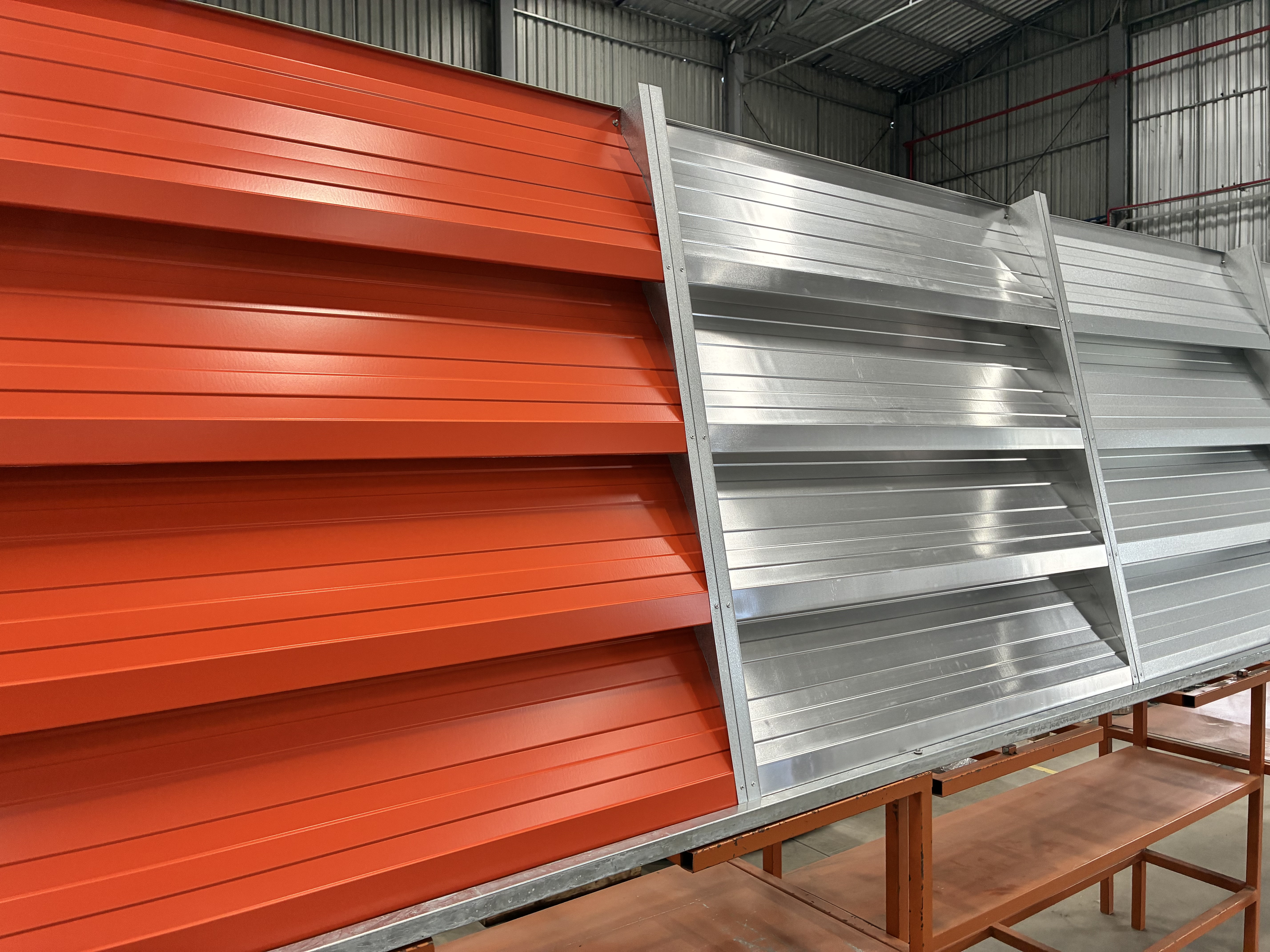
A natural ventilationuses the wind power available in nature to provide a pleasant and healthy environment forlow cost. The use of equipment aimed at natural ventilation, such as industrial shuttersand lanterns, is today the best strategy forimprove temperature control and maintain the quality of air circulation in industrial environments, all without energy consumption.

Discover the natural ventilation options for industry offered by Grupo MB.
Read more: Benefits of natural ventilation on cold days
3. Save energy with natural lighting
In addition to complying with the rules established by regulatory standards, the use of natural lighting canconsiderably reduce electricity consumption in a factory.
This architectural feature has great appeal in industry, both in small businesses and in large industrial complexes. Natural lighting guarantees a quick return on investment, in addition to promoting the health and well-being of employees.

Among the solutions offered by Grupo MB is theContinuous Domus. With high resistance and durability, it can be installed on any type of roof to offer more lighting and reduce energy consumption.Find out more about this and other MB Group solutions for natural lighting.
Read more: Industrial lighting: natural light really saves energy
4. Invest in technology
Technology is a great facilitating tool, responsible for many of thesustainable solutionsexisting on the market. Seeking technological solutions makes your project intelligent, making customers' lives easier and harming the environment less and less.

Even though the necessary investment seems high, make no mistake: often,the initial cost can guarantee considerable savings and protection in the medium and long term.
This is the case, for example, ofMB Smart,of the MB Group. It is a technology formanage industrial lighting in an automated way. With it, you can control the lighting in different sectors as needed. In addition to its efficiency, MB Smart can also be combined with Domus Light, as it will adapt the artificial lighting according to external natural lighting, bringingeven greater energy cost savings.
5. Stay up to date with the legislation
When working with sustainable architecture, it is essentialfollow the laws and regulations in force in the country. After long years of discussions, it is now possible to have legislation that protects the environment and encourages the adoption of good practices. Compliance with these standards is essential, asThere is no sustainability without social responsibility.
Furthermore, full compliance with legislation allows companies to undergo different certification processes, which evaluate their performance based on specific standards for each sector.
6. Behavior change
Changing the behavior of professionals is perhaps the biggest challenge faced when applying sustainable architecture to a project. Without full understanding on the part of the work team, it is difficult for sustainability ideas to be properly implemented.
Only with the understanding of its importance will sustainability become part of the organization's habits and, consequently, of the new projects that will be implemented.
It is necessaryawarenessand clarity so that sustainable good practices becomesmart solutions, capable of contributing to thewell-being of people and the preservation of natural resources.