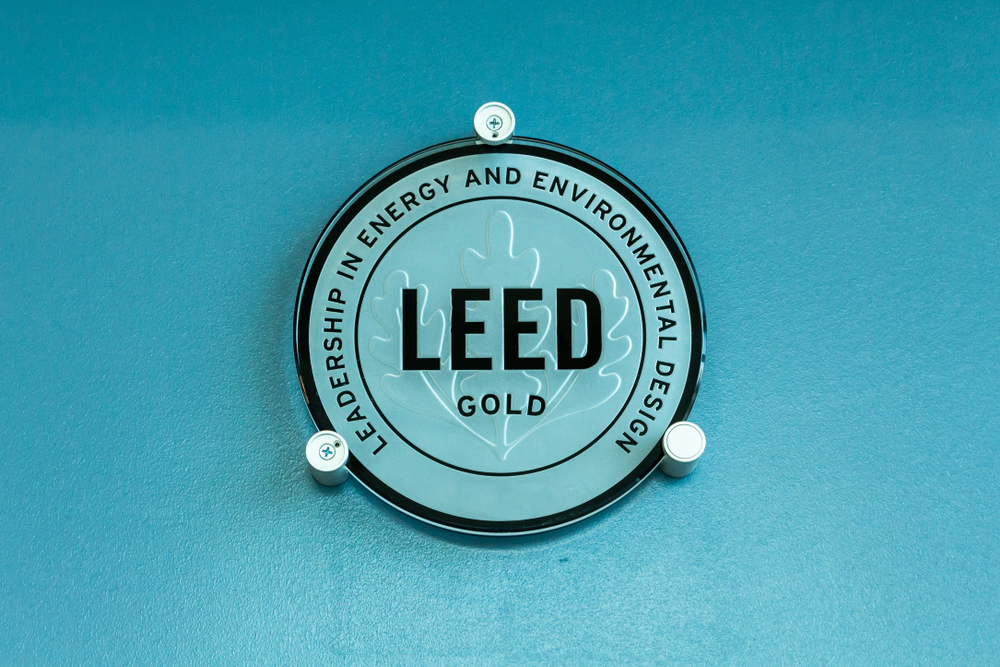
Did you know that Brazil occupies 5th place in the ranking of sustainable buildings in the worldThis is what afeetquisaof 2020 from the United States Green Building Council (USGBC), entity that created the LEED (Leadership in Energy and Environmental Design) certification.
According to the data in this report, Brazil has more than1.500sustainable buildings. Of these,641they already have LEED certification and another 50 million square meters are still in the process of obtaining it.
There are several criteria for obtaining certification. They all contribute to a more conscious, economical and optimized production chain in the industry. These criteria are therefore related to thesustainability theme, going far beyond the rational use of the planet's resources and the reduction of environmental impacts.
Although these are the aspects most remembered when we talk about the subject,sustainable construction also involves economic and social factors. After all, environmentally friendly solutions generate less expense for the company's coffers.
Furthermore, society's growing concern about conscious consumption means thatsustainable industries stand out in the market, gaining the preference of end consumers.
In short, all these aspects have to do with the decisive criteria for LEED certification, a seal that attests to sustainability in companies and places them in a prominent position compared to the competition. Continue reading and find out how to obtain it in your factory!
What is LEED certification
A LEED Certification, acronym forLeadership in Energy and Environmental Design(Leadership in Environmental and Energy Design), is themain certificate that proves that a construction project is in fact sustainable. It is, therefore, a reference certification to attest not only to the social responsibility of a given company, but also to the efficiency of its production processes.
The LEED seal is used in more than 160 countries, and in Brazil the institution responsible for granting it is theGBC-Brasil – Brazilian Sustainable Construction Council. The body makes assessments based on pre-defined criteria. As these criteria are met, companies add credits that will be computed towards the final score, giving rise to the certificate.
Still according to the USGBC report that we cited in the introduction of the content, sustainable enterprises in Brazil stand out mainly due to the average reduction in25%in energy consumption and40% to 60%in water consumption. Furthermore, these constructions divertmore than 80%of landfill waste, contributing to a more conscious consumption chain.
What are the criteria for LEED certification
The evaluation of projects by GBC occurs according to eight dimensions. If the work does not meet any of the prerequisites, issuing the certificate will not be possible. These are the eight areas evaluated:
- Location and transportation;
- Sustainable space;
- Efficiency of water use;
- Energy and atmosphere;
- Materials and resources;
- Internal environmental quality;
- Innovation and processes;
- Regional Priority Credits.
The more sustainable practices the company adopts in each of these segments, the greater the number of credits obtained by the enterprise.– which may vary from40 a 110points. This will define the level of LEED certification obtained:
- Certificate:40 to 49 points;
- Silver:50 to 59 points;
- Gold:60 to 79 points;
- Platinum:Above 80 points.
It is also worth remembering that LEED certification has four types, considering that each type of project has specific needs. These are the four typologies:
- Building designConstruction:new construction and major renovations;
- Interior Design Construction:commercial offices retail stores;
- operationexisting enterprises;
- Neighborhood:neighborhoods.
Currently, the general average of reductions in Brazil records the following levels:
- Water: 40%;
- Energy: 30%;
- CO2: 35%;
- Waste: 65%.
How to Get a LEED Certification
We saw that, to obtain the LEED seal, the enterprise needs to obtain a satisfactory score as demonstrated by thesustainability practicesadopted by managers. Among the decisive criteria for a good score, the following stand out:
- Minimum Program Requirements (MPR):are the basic criteria for obtaining certification, considering current legislation at municipal, state and federal levels;
- Sustainable Space (SS):these are the criteria that attest to points of improvement for the challenges of large urban centers, such as reducing visual pollution, implementing bicycle racks, cycle lanes, among others;
- Energy and Atmosphere (EA):are the criteria that attest to the use of energy from innovative and more efficient sources;
- Water use efficiency (WE):are the criteria related to the reuse of water and the reduction in drinking water consumption, which can be done through stations for reusing rainwater;
- Materials and Resources (MR):these are the criteria that attest to the use and reuse of clean materials, which generate the smallest possible amount of solid waste for the environment;
- Indoor environmental quality (EQ):These are the criteria that assess well-being in closed places where employees spend many hours during working hours, such as factory warehouses. In this case, smart lighting and natural ventilation solutions make these places more sustainable.
Want to know more about natural lighting and ventilation systems for industrySee what the best options areand understand why it’s worth the investment!
What benefits will a LEED certification bring to your business?
Let's look at the various benefits of LEED certification in industrial construction, in addition to reducing costs.environmental impacts:
Economic factors
- Lower operating costs for the industry;
- Compliance with regulatory standards;
- Valuation of the enterprise;
- Better brand positioning in the market;
- Factory modernization.
Social factors
- Improvement in the safety, health and well-being of employees;
- Corporate environment with better quality of life;
- Increased sense of community and social inclusion;
- Improvement in employee performance;
- More aware and productive employees.
Environmental factors
- Rational use of natural resources;
- Reduction in electricity and water consumption;
- Energy efficiency for industries;
- Reducing the impacts of climate change;
- Use of low environmental impact technologies.
Which solutions to invest in to obtain certification
According to the criteria evaluated for LEED certification, several solutions can be useful for the company to meet the prerequisites, such assystems for reusing water, the conscious use of raw materials, the appropriate disposal of waste and the quality of working conditions in the corporate environment.
However, we can say that one factor stands out in this entire process: theenergy efficiencyin the industrial sector. This is because electricity savings are related not only to the rational consumption of the planet's resources, but also tocleaner and more efficient manufacturing processes.
Next, we will talk about two solutions that allow you to achieve energy efficiency and get closer to the criteria for LEED certification in the industry.
Natural lighting domus
Younatural lighting domeThese are sustainable solutions for implementation in industrial warehouses that seek the LEED seal. That's becausedo not require the use of artificial lamps during most of the working day, illuminating about eight times more than a window of equivalent opening. The high rate of solar reflection, driven by prismatic polycarbonate, guarantees an optimal level of luminosity without letting ultraviolet radiation pass through.
In other words, in addition to significantly reducing theelectrical energy consumptionIn industry, domuses preserve the health of employees and provide a more visually pleasing workplace. This makes it easier to carry out activities and improves team performance. Another advantage is that the domes have an excellent aesthetic finish, making the warehouse brighter and more modern.
There is also the possibility of integrating an intelligent system into the natural lighting dome to more effectively control energy consumption. One example is MB Smart, a solution that manages all of the warehouse's lighting resources so that energy savings are as high as possible.
It works like this: the system dims the LED lamps according to the natural light that enters the domus, therefore consuming the minimum amount of energy necessary to keep the environment well lit. Furthermore, by controlling the intensity levels of the LEDs, it is possible to regulate the factory's brightness according to the specific needs of each sector of the warehouse.
Natural ventilation systems
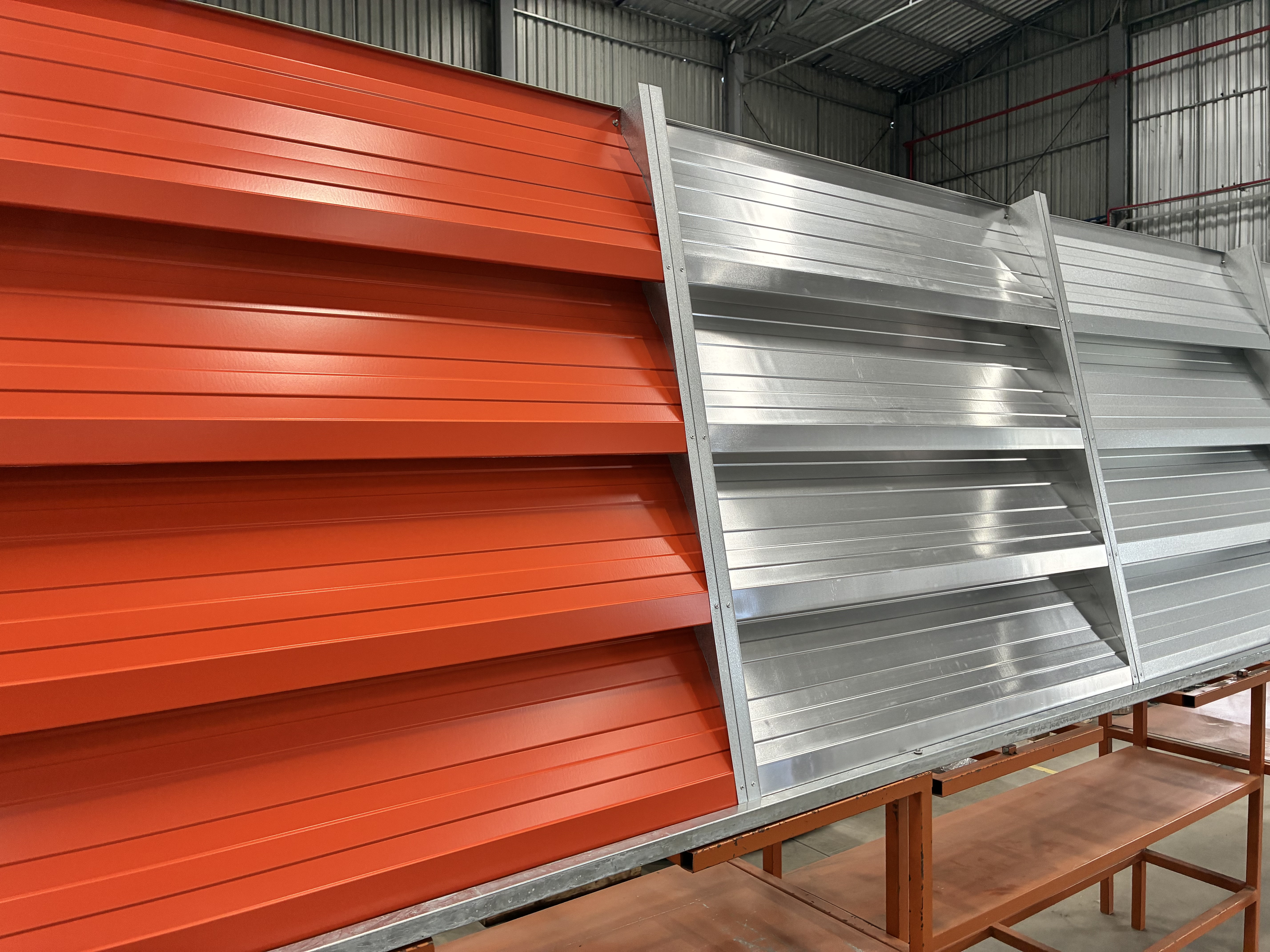
Natural ventilation systems that combineindustrial shutters and lanternsThey represent the most innovative in terms of thermal comfort combined with energy savings. The air that enters through the shutters favors circulation inside the industrial warehouse through thechimney and venturi effects, while the exhaust process that takes place inside the lanterns eliminates any toxic particles from the environment.
This process is responsible forimprove air quality in the environment– preserving the respiratory health of workers – at the same time aseliminates the use of mechanical exhaust fans and air-conditioning devices such as air conditioning, which consumes very high levels of energy, especially if used during most of the working day.
That's why investing in natural lighting and ventilation solutions has a guaranteed return and allows your industrial enterprise to come closer to meeting the criteria for obtaining LEED certification.
O MB Groupis a reference in the segment of sustainable solutions for industry, operating for 20 years in the manufacture and installation of high-performance industrial domes, lanterns and shutters.
Contact usand invest in the best solutions to make your company more sustainable, reducing operational costs and valuing your brand in the market!