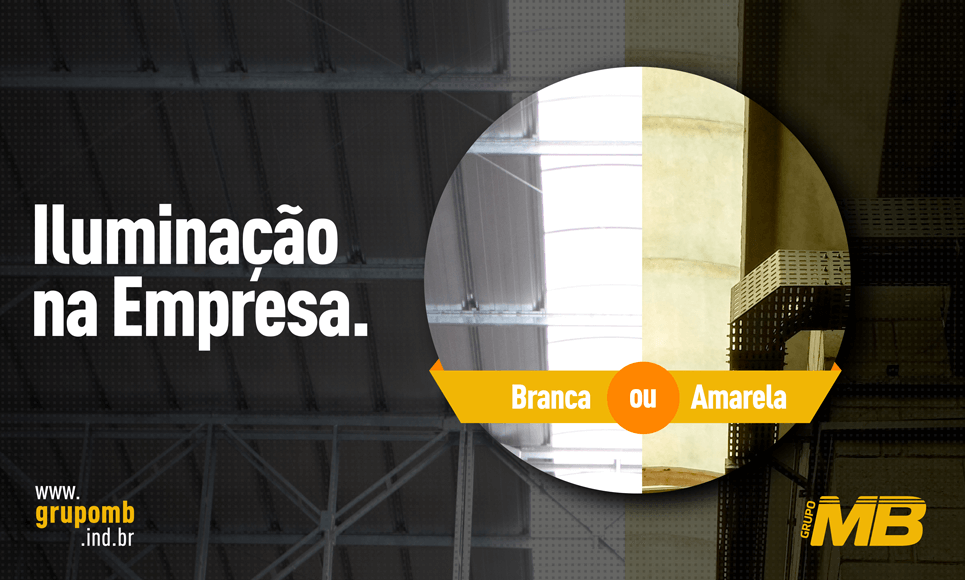
Due to its intensity,white light is the most recommendedwhen it comes to lighting for industrial warehouses. However, despite providing good lighting, relying solely on this solution may not be such an effective strategy in terms of cost-benefit. That's becausethe incidence of direct light does not bring much comfort to employees, not to mention that they need to be careful not to forget the light bulbs are on and generate unnecessary consumption.
In this sense, the ideal is to combine artificial lighting with natural lighting dometofavor not only energy efficiency, but also the well-being of employees. Taking advantage of natural light makes the work environment much more pleasant, which influences team productivity. Continue reading and understand this relationship better!


How to measure the color temperature of the lamp
When lighting environments, an aspect that should not be neglected is thelight tone, considering white and yellow lamps. Going beyond personal taste, the color of the beam directly affects the people subject to that lighting,even impacting work performance.
The tone of light, called color temperature, is measured indegrees Kelvin. In principle, it is strange to evaluate the color of light with a temperature measurement, but the reference for this is the luminosity of a hypothetical object, ideally black (that is, which does not reflect any light) exposed to certain temperatures.
When heated, this body would emit a luminosity that varies as heat accumulates. All we need to do is imagine a red-hot iron bar to understand the phenomenon. Thus, color temperatures deal with the tone of light that this object would emit, and have no relationship with the heat that the lamps actually produce.
See the color temperatures according to the tone they represent:

How white or yellow light impacts work
Sunlight changes hue throughout the day. At dawn and dusk, it tends to yellow and orange, around 3,000K. At noon, the light is closer to 5,000K, where it has a whiter, bluish hue.And our biological clock responds to the type of lighting present.
Therefore, theYellow light is recommended for residential lighting, where it promotes calm and relaxation. AlreadyIn offices, companies and factories, the ideal is to use white light, as the human organism recognizes it as a more active lighting, contributing to our focus and concentration at work.
This means that preference for shade is not restricted to personal taste. The lamps have different colors because each one adapts better to a certain environment and the activities that will be carried out. Therefore,In a lighting project for an industrial warehouse, white lamps will have priority.
However,relying solely on artificial lighting is not the most efficient strategy. To guarantee effective lighting, which does not generate extra costs or affect vision, a great way is to invest in a natural lighting dome. This way, you can combine visual comfort and practicality in factory tasks without overloading the electricity bill.
There are those who prefer to opt for translucent tiles. However, theyare less recommended, as the cost-benefit is much lower compared to using domus. When completely transparent, the tiles transmit greater variations in tones. Furthermore, over time they turn yellow, creating a lower color temperature, like that of sunset and incandescent lamps, whichdo not favor industrial activity.
So, why combine domus and artificial lighting?
As we have seen, domuses are the most suitable solutions to complement artificial lighting in industries and ensure better performance in day-to-day activities. THE MB Group Domus Linealight, for example,illuminates up to eight times more than windows of equivalent opening.
It works by refraction, allowing natural light to expand to strategic points in the workplace, meaning it does not fall directly on employees and equipment. Furthermore, domuses block more than 95% of ultraviolet rays and can be installed on any type of industrial roof.
Next, we summarize the advantages of combining cold lamps and domes in lighting projects for industrial warehouses.
More energy efficiency
How domus favorstrategic entry of natural light, there will be no need to keep the lamps on for most of the day. To further optimize these savings and achieve maximum energy efficiency, it is also possible to install a smart plant, such as the MB Smart, to activate the lamps in an automated way, dimming the beams according to the sector and activities in question.
More comfort and well-being
In addition to reducing energy costs, domuses are winning solutions when it comes to bringing greater well-being to employees. That's becauseNatural lighting helps keep the workplace healthy, also influencing team productivity. Artificial lighting, in turn, ends up directly affecting employees, causing intense visual discomfort and hindering performance.
More energy and productivity
This has everything to do with what we talked about in the previous topic. In the end,When the employee is feeling comfortable, their performance improves considerably. Working all day under the influence of cold or yellow light is not healthy, even if it is necessary to use them some of the time. By installing natural lighting domes, you solve this problem once and for all.
The solution allows theperfect balance between the entry of sunlight and the use of artificial lighting, so that the climate in the warehouse is as pleasant as possible. Thus, in addition to the results evident in the electricity bill, the factory will have motivated and well-disposed employees for a longer period of time. Remember: cherish quality of life at work It is also a conscious attitude.
Therefore, when choosing lighting solutions for industrial warehouses, think about these aspects and make your factory more sustainable with the rational use of the planet's resources. Everyone wins: you, your employees and future generations!