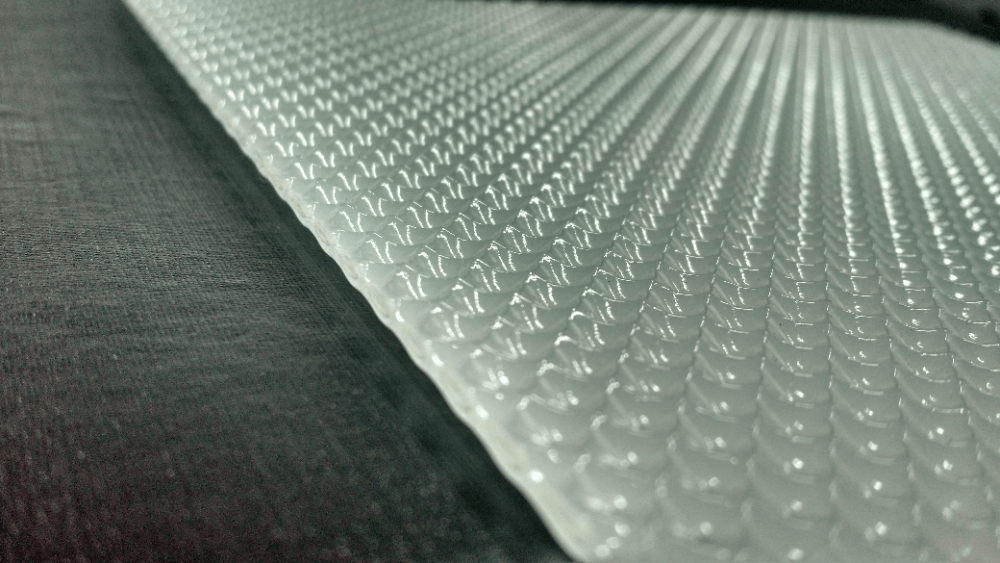
The market for natural lighting and ventilation solutions for industries offers products made from various materials, which aredecisive for system performance. THEprismatic polycarbonateis, without a doubt, the material that offers the best cost-benefit for industries, considering itsdurability, lightness and transparency.
This means that, in addition to promotingsunlight input inside the warehouse,Solutions made from prismatic polycarbonate require little maintenance and are very easy to install. This way, employees will be able to enjoy the benefits of the installation as soon as possible.
Continue reading and learn about the material’s differences!
In which solutions can prismatic polycarbonate be used
Prismatic polycarbonate is a champion material of choice in the manufacture ofnatural lighting dome. The domus areintelligent solutions to ensure the entry of natural light into the factory, which contributes to the visual comfort of employees and helps to reduce costs with artificial lighting.
By choosing a prismatic polycarbonate dome, your industry will be choosing the best cost-benefit option. The list of advantages is long, and we will talk more about them below.
What are the advantages of these solutions for the industry
We summarize below the immediate and long-term benefits provided by natural lighting and ventilation solutions.
Promote natural lighting
The domus has openings that allowstrategic entry of sunlight into the industrial warehouse. This means that this light will not fall directly on employees and equipment, causing greater heat, but will spread throughout the environment, illuminating andincreasing visibility internally.
When theindustrial roofing are made of prismatic polycarbonate, reachilluminate up to eight times brighterthan windows of equivalent opening. It is also worth remembering that good quality domes produced in this materialblock 98% of ultraviolet rays, preserving the health of employees.
Provide thermal comfort
O thermal comfort is guaranteed by the action of natural lighting domes in partnership with permanent ventilation systems. This is because they canmaintain a pleasant internal temperatureavoiding the direct entry of sunlight, while ventilation contributes to the exchange of this air. As warehouses are closed environments, this air exchange is also essential forprevent the spread of respiratory diseases, including Covid-19.
Save electrical energy
In the long term,the installation of domus contributes to the industry achievingenergy efficiency and stand out in the market as a modern and sustainable company. After all, a well-lit and thermally comfortable environment influences theenergy expenditureof the company, reducing costs with artificial lighting, fans and air conditioning units.
What are the differences between prismatic polycarbonate
Just like prismatic polycarbonate, fiberglass and PVC are also materials widely used in the manufacture of natural lighting solutions, such as domes.However,In terms of quality and cost-benefit, polycarbonate is far ahead of other materials.
Fiberglass, despite being resistant and low cost, isflammable and unfavorable to the passage of sunlight. Another disadvantage of the material is that ittends to yellow with time of use, which affects both the functionality and the aesthetics of the solution.
PVC is even cheaper than fiberglass, but although it is self-extinguishing, it is alow resistance and durability material. This could cause losses to the factory in the long term, as the system would requireconstant maintenance. Furthermore,its performance in terms of diffusing sunlight is also not attractive, transmitting high levels of radiation.
Based on the properties of these three materials, it is not difficult to understand why thepolycarbonate Prismatic is a winning choice for high-performance projects with excellent durability.Even though the value is higher, the cost-benefit of the material makes up for the investment, as the return is certain.
When used in natural lighting domes, the differences between prismatic polycarbonate and other materials are:
- High light transmission rate;
- High rate of solar reflection;
- Very high refraction and diffusion capacity of light;
- Blocking the entry of UV rays.
Together, the properties of prismatic polycarbonate make this material the number 1 option for your project,combining durability, safety and maximum efficiency for natural lighting solutions. Not to mention, of course, thefinancial returnfor the company's coffers and promoting quality of life in the workplace.
To find out more about this material,speak to one of our experts and invest in high-performance, first-quality solutions!