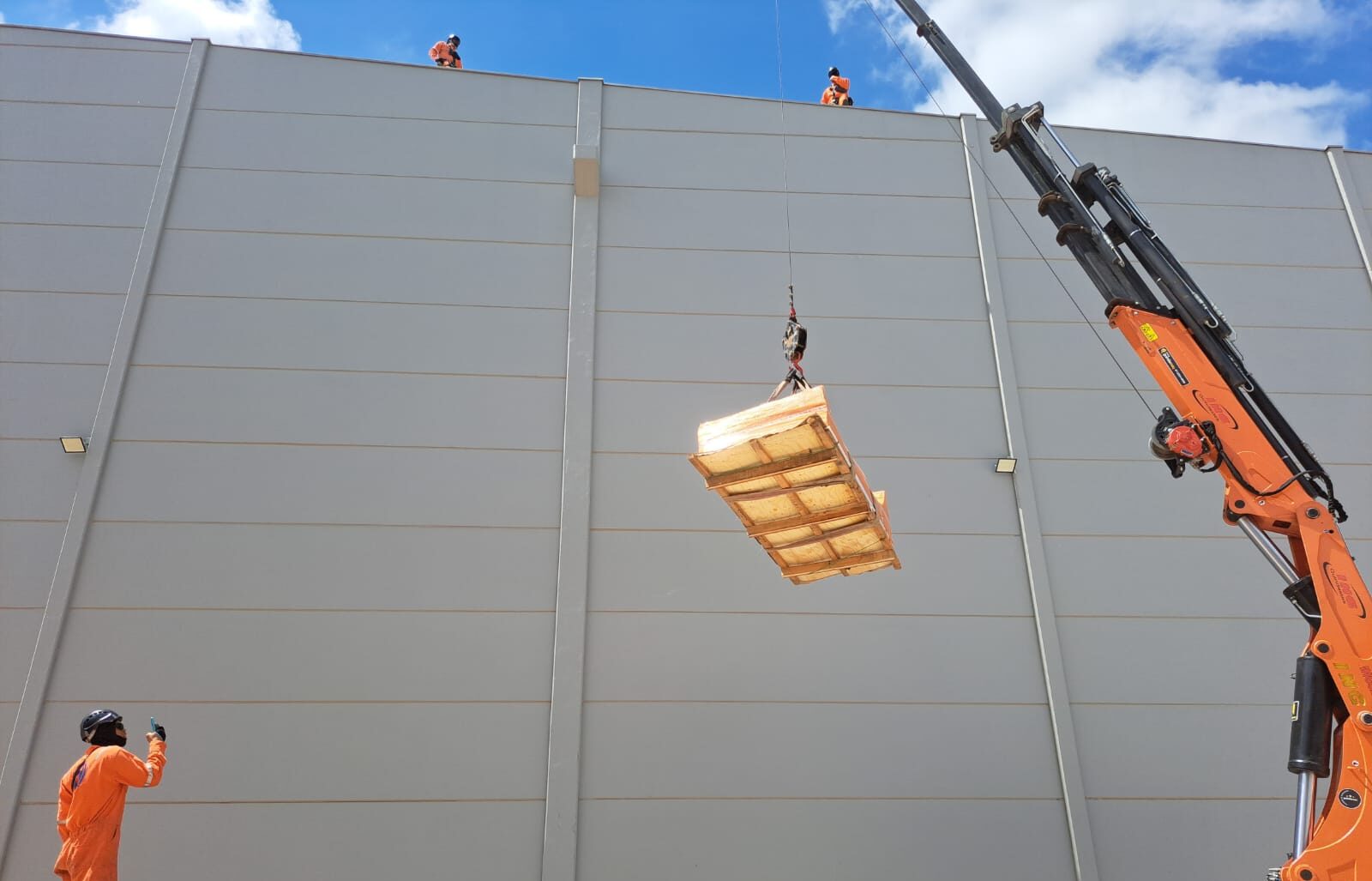
There are no Regulatory Standards (NRs) directly linked toenterprise architecture, however, some of them can influence this organizational process, especially when we consider the physical infrastructure and the work environment.
The NRs are mainly aimed at occupational health and safety issues. They are developed by the Joint Tripartite Commission for Safety and Health at Work (CTPS), which is made up of the Ministry of Labor and Employment (MTE) with the aim of establishing parameters that guarantee the protection of employees.
And in order to avoid problems, it is crucial to know them before carrying out any business project. Follow the article and discover the main ones!
Regulatory Standards in corporate architecture
Discover now some of the main NRs related to corporate architecture that Grupo MB can help your company adapt to.
Infrastructure and Layout (NR 17)
This standard deals with ergonomics and establishes parameters to adapt working conditions to the psychophysiological characteristics of workers. It can directly influence the arrangement of furniture, equipment and the size of spaces. Companies that do not comply with the provisions of NR-17 may be subject to fines and other penalties.
To ensure compliance with NR-17, Grupo MB offersnatural lighting and ventilation, like theDomus Linealight, Lantern e MB Smart. Furthermore, the serviceretrofitfrom Grupo MB can help companies adapt their spaces according to the requirements of the standard.
The main aspects that NR-17 include are:
- individual lifting, transportation and unloading of materials: establishes the criteria for carrying out these activities with the aim of avoiding excessive efforts or inappropriate postures that could harm the worker's health;
- workplace furniture and equipment: defines specifications for office furniture, such as tables and chairs, and equipment, such as computers and monitors, to ensure that they are suitable for the type of activity, individual variation in anthropometric dimensions to minimize discomfort or health risk;
- environmental working conditions: Sets the parameters for lighting, noise,adequate temperature and ventilationto ensure comfort and health in the corporate environment;
- work organization: addresses aspects such as defining breaks during working hours, work rhythm and methods, aiming to reduce fatigue and other related problems;
- teleservice work: This is a more recent addition to the standard and establishes specific criteria for teleservice and telemarketing jobs, including the aspects listed above.
Safe work environment (NR-10 and 12)
NR-10 (Safety in Installations and Services with Electricity) establishes the basic guidelines for implementation, control measures and preventive systems designed to guarantee the safety and health of workers who interact in electrical installations and services with electricity.
Its main points are:
- objective and field of application;
- control measures;
- security in projects;
- risk analysis techniques;
- work procedures;
- fire and explosion protection;
- safety signage;
- safety training;
- responsibilities;
- documentation.
NR-12 (Occupational Safety in Machines and Equipment) defines technical references, fundamental principles and protective measures to safeguard the health and physical integrity of employees.
It also establishes the minimum requirements for the prevention of accidents and illnesses at work in the design and use phases of machines and equipment, as well as their manufacturing, import and commercialization. Its main points include:
- physical arrangement and facilities;
- electrical installations;
- starting, starting and stopping devices;
- security systems;
- permanent means of access;
- signaling;
- manuals;
- security procedures;
- training.
For this reason, the influence that thesecurrent standardscan have on the arrangement and choice of equipment and systems in a corporate environment.

Sanitary and Comfort Conditions in Workplaces (NR-24)
This standard is focused on sanitary and safety conditions.thermal comfortin workplaces. It establishes the minimum requirements so that the facilities are suitable for the well-being of workers.
To ensure a healthy working environment in compliance with NR-24, Grupo MB offers natural lighting and ventilation solutions, providing more pleasant and healthy environments for employees.
Here are some key points she covered:
- changing rooms: work environments where employees need to change clothes to carry out their activities, workplaces must have changing rooms equipped with individual lockers and benches;
- cafeterias: workplaces must have appropriate places for employees to eat, meeting hygiene, location, capacity, ventilation and lighting criteria;
- kitchens: in the case of companies that offer meals, the kitchen must be separated from the activity, storage and rest areas;
- accommodation: they must also follow specific dimension criteria,ventilation, lighting and hygiene;
- sanitary facilities: the standard stipulates a minimum number of facilities depending on the number of employees and gender, as well as location, hygiene and privacy;
- drinking water: must be provided to employees, and the use of collective cups is prohibited;
- conditions ofthermal comfort: workplaces must have adequate ventilation to renew air and ensure that the temperature remains at comfortable levels;
- lighting: workplaces, passageways and other facilities must be provided withnatural lightingor artificial, appropriate to the nature of the activity;
- hygiene conditions: work facilities must be maintained in hygienic conditions compatible with the type of activity, with daily cleaning and avoiding the accumulation of dirt or debris.
Safety Signage (NR-26)
With the aim of standardizing and simplifying signs and, consequently, reducing risks related to the health and safety of employees, NR-26 specifies the requirements for the use of colors for safety signs.
It also addresses the Chemical Product Safety Information Sheet (MSDS) and other elements associated with communicating chemical product hazards.
- Safety signage: colors play a fundamental role in identifying safety equipment, delimiting areas, identifying liquid and gas pipes, among others:
- red: used for mandatory stop signaling, identification of fire protection equipment and appliances, etc.;
- yellow: used in warning signs, indicating attention;
- green: indicates security situation, used in places of help or emergency exit;
- blue: mandatory signage, such as safety equipment inlife lines;
- orange: identify moving parts of machines and equipment;
- purple: identify penetrating radiation;
- aluminum: pipes containing flammable liquids.
- Preventative labeling: the standard highlights the importance of labeling on containers containing chemical products, informing about the risks associated with the product;
- Chemical Product Safety Data Sheet: Used to provide information about chemicals used in the workplace. It should contain details about the product's composition, properties, first aid measures, precautions for safe handling, etc.
Accessibility to Buildings, Furniture, Spaces and Urban Equipment (NBR 9050)
NBR 9060 establishes the criteria and technical parameters to be observed regarding the design, construction, installation and adaptation of urban and rural areas in relation to accessibility conditions.
It is fundamental to guarantee access rights for everyone, regardless of their physical, sensory or mental conditions. They include:
- accessibility terminologies;
- accessibility parameters to the enterprise’s facilities;
- detailing specifications for elements such as ramps, stairs, handrails, elevators, doors, windows, toilets, etc. always aiming for accessibility;
- accessibility to benches, drinking fountains, public telephones, counters, counters, tables, etc.;
- adaptation of existing structures;
- drawings and illustrations that exemplify and detail the proposed technical solutions.
The NRs applicable in the context ofenterprise architectureThey are mandatory to be observed and, therefore, non-compliance can lead to legal sanctions for the company, which is subject to being fined by labor inspectors and resulting in: fines, interdictions, embargoes, civil and criminal liability, labor actions and suffering impacts on image and reputation. Ignoring them can compromise the lives and safety of employees and, therefore, it is essential to be well-informed and in compliance with them.
MB Group is here to help your company adapt to these standards and ensure a safe and healthy working environment. To learn more about industrial architecture, continue reading abouthow to guarantee the well-being of employees in the industrial context.