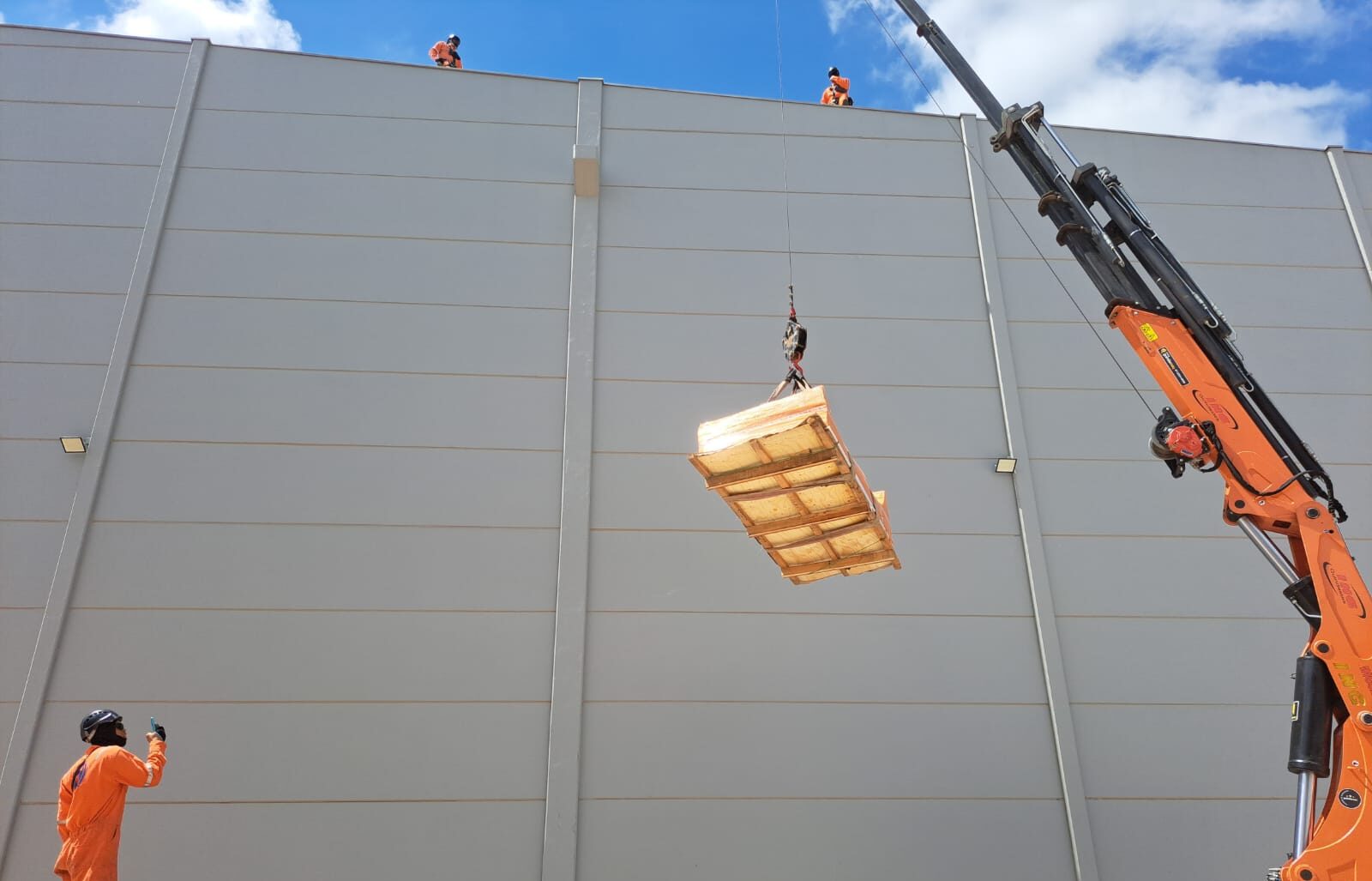
Activities carried out at height require a series of precautions to ensure the physical integrity and safety of the worker. In work carried out on roofs, for example, the use oflife lineis mandatory, as is the use of seat belts and suitable anchor points.
The MB Group is an expert on the subject and, thinking about reinforcing the importance of this set, we have created this special content on the mandatory components of the lifeline. Continue reading and find out more!
What is the lifeline and why is it important?
Lifeline is the name given to a system of steel cables and/or ropes that are attached to structural anchors.
The main function of the lifeline isprovide a secure anchor point,so that employees can secure themselves using a safety belt or personal protective device and move freely along the lifeline. This precaution prevents falls that could result in serious injuries or even death.
In some countries, such as Brazil, there arespecific laws and regulations that require the use of fall protection systems. THENR35 – Working at heightsdetermines the minimum requirements and protective measures for working at height (above 2 meters from the lower level, where there is a risk of falling).
Furthermore,The use of the lifeline is a demonstration of the company's commitment to ensuring safety and security.employee well-being.
How the lifeline is installed
Lifeline installation may vary depending on the system chosen and the specific characteristics of the workplace, however, some general steps are involved in this process.
After evaluating the location, it is necessary to design the system, defining how many fixing points will be needed to meet the needs of the security services.roof cleaning or maintenance.
Firstly,anchoring devices are fixed to the surfaceand then thesteel cables, connecting each of the points. After having the cables connected, you need to perform atensioning, so that they are stretched and firm. Finally, once the installation is complete, a tension test is carried out to ensure that the structure is safe.
What are the mandatory components of the lifeline?
Mandatory lifeline components tend to vary depending on the rules and regulations of each country or region, but the items listed below are considered essential.
steel cable
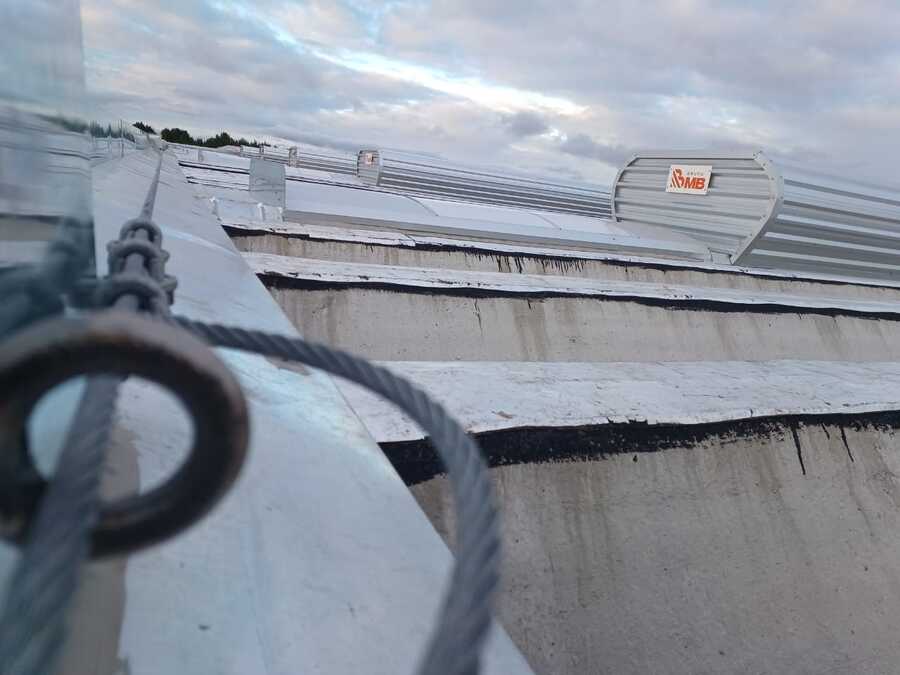
The steel cables serve aslink between anchoring componentsand are fixed to the roof. They are composed ofPrecisely twisted and intertwined steel wires, creating a resistant and reliable structure.
To avoid direct contact of the steel cable with the parts, a heavy hot-dip galvanized shoe is used. It allows you to make a “bend” of a specific radius, protecting the cable against premature breakage.
Hot-dip galvanized heavy shoe
The hot-dip galvanized heavy shoe is responsible foravoid direct contact of the steel cable with other devicesand make a “curve” of a specific radius. It plays an important role in protecting the wire rope against wear, excessive friction and premature breakage.
This shoe is usually made from a resistant material, such as hot-dip galvanized steel. This means that it goes through a coating process with a layer of zinc, in order to protect it against corrosion and increase the durability of the part.
Heavy Steel Clamp
The heavy steel clamp is responsible forlock the steel cable, either at the ends or at intermediate points. It plays a crucial role in system safety, keeping the steel cable properly locked and preventing accidental releases.
Heavy steel turnbuckle
Also hot-dip galvanized, the heavy steel tensioner is a component used inlife linewhich plays an important role in tensioning the wire rope. Its function isreduce the arrow, i.e,the vertical displacement of the steel cable when subjected to a load.
Carabiner
A carabiner is a ring-shaped device usually made of strong metal such as steel or aluminum. He has aclosing mechanismwhich can be locked securely toensure a reliable connection between lifeline elements.
This is the component used to connect the safety belt or fall protection device to anchor points or other lifeline components.
Galvanized Energy Absorber
The component of the protection system that has the function of reducing the impact transmitted to the worker by dissipating force is called energy absorber.
The energy absorber is adevice designed to absorb and dissipate energy generated during a fall. It is connected between the anchor point and the seat belt or fall protection device.
When a fall occurs, the energy absorber stretches or deforms, converting the kinetic energy into strain energy or heat.
Anchoring device
The anchoring device is designed to be fixed to the structure by means of some suitable fastening element. HeProvides safe, reliable anchor points for workers to secure themselves when working at height.
There are different types of anchorage available, designed to meet specific requirements:
- anchor eyes;
- anchor plates;
- anchor brackets;
- chemical anchoring.
The lifeline is a set of equipment that needs to pass throughperiodic maintenance— to ensure that all items function correctly, without putting the life of the worker carrying out a work at risk.work at height— and for replacement after one year (warranty period).
Count on theMB Groupto maintain thelife linewithin security compliance is an intelligent and responsible decision. MB Group's experience, technical knowledge, compliance with regulations and commitment to worker safety help ensure a safer working environment protected against falls from height.
Are you interested in purchasing ourlife lineand ensure the safety of employees in your industry? Then,contact usright now and learn more about our solution!