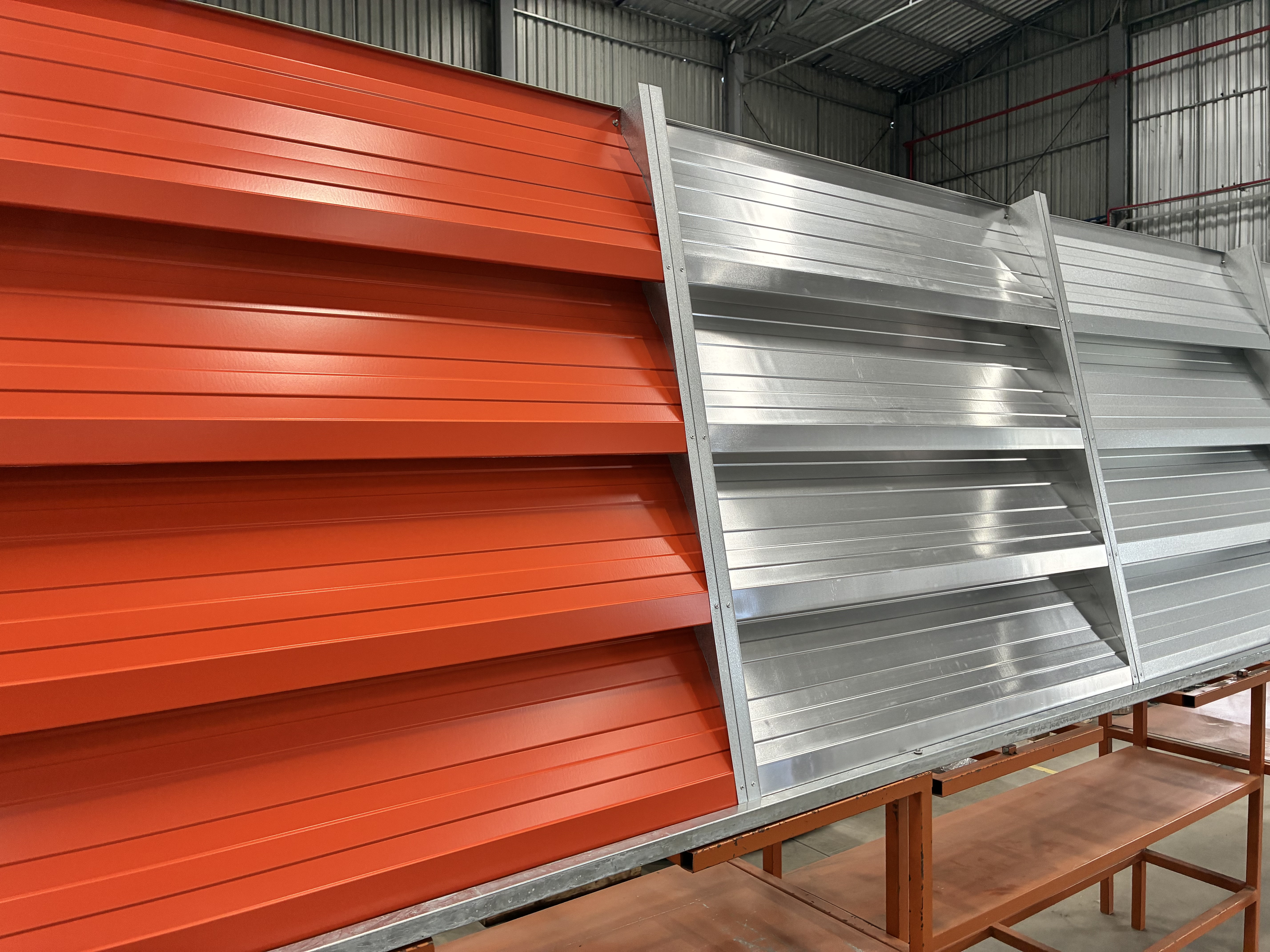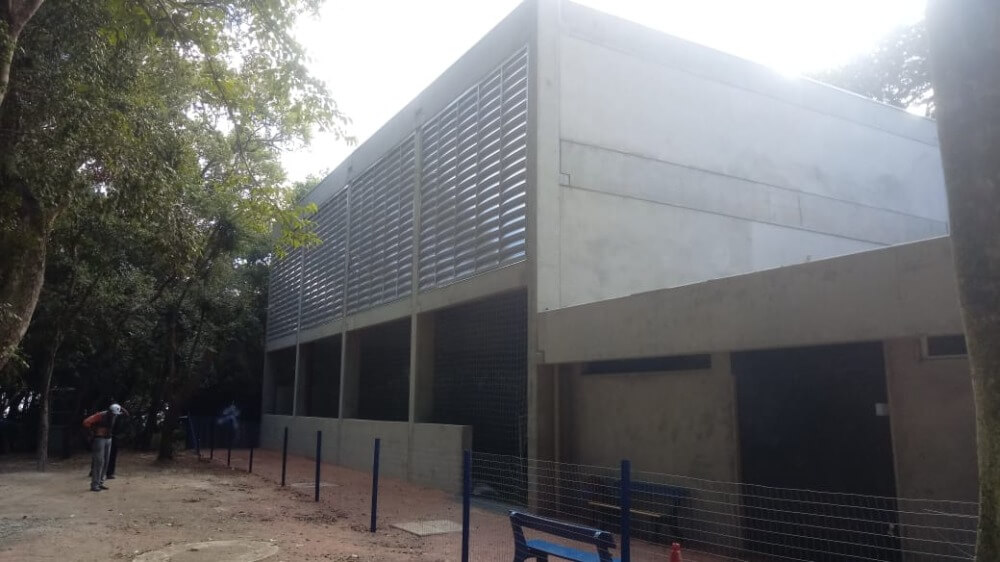
Understanding the behavior of the air inside an industrial warehouse is the first step towards a successful natural ventilation project, such as shutters andMB Group lanterns. Several factors influence this behavior, such asposition of the building in relation to the wind and sun, the wind speed inside the enclosure and the size of the existing doors and windows.
Having exact knowledge about air circulation is what will allow you to correctly size natural ventilation systems, in order to make the most of the benefits of the structure. Thermal comfort is an immediate gain, which directly impacts employee productivity. In the medium and long term, there will also be asignificant reduction in electricity costs. Continue reading and understand how it works!
How the air behaves inside the warehouse

Among the solutions available on the market for implementing natural ventilation in industrial warehouses, theLantern is one of the most used. The operation of this product is based on thedifferences in temperature and air density in the environment. Therefore, to understand the behavior of the air in the warehouse, consider the occurrence ofchimney and venturi effects.
In the first case, the effect is the result of air displacement due to differences in temperature and pressure. Cold air becomes more compact and denser, so it tends to descend. Hot air, in turn, tends to rise and expand to higher altitudes. In this way, while it is displaced by the cold air that enters through the doors, windows and other openings of the warehouse, the hot air escapes through the Lantern,favoring circulation and maintaining thermal comfortin the enclosure.
The Venturi effect occurs at the entrances and exits of the Lantern, maximizing theair circulation due to the narrowing of the pipe, which causes the speed of the fluid that will be expelled at the top to increase. Thatoptimizes the exhaust effectand helps to make the place thermally more pleasant.
Another parameter that must be used when implementing skylights is therateideal air renewal per hourin the enclosure. This calculation establishes that, through ventilation resources, the warehouse must exchange all internal air a certain number of times every hour. Having this notion is essential forensure health levels in the factoryand prevent the spread of various respiratory diseases, such asCovid-19.
To make this calculation, it is necessary to consider thedimensions of the shed (total volume) and openings for air entry and exit (doors and windows), which will give an idea of the flow rate per second in the environment. From there, it will be possible to define the time needed for the air in the room to exit through the Lanternim and be completely renewed, in addition to how many times per hour this should occur.
How CFD helps in industrial natural ventilation design
Do theair exchange calculation Manually takes more time and demands extra attention from engineers to avoid errors or negligence, which makes the work more difficult and can lead to delays in the installation of natural ventilation systems. That's where theComputational Fluid Dynamics (CFD), a Computational Engineering methodology that works as afluid calculator.
This tool optimizes the development of natural ventilation projectsclearly demonstrate the behavior of the air in that environment. CFD operates through thevirtual reality, in which real warehouse data is inserted into a 3D mesh that validates the calculations necessary to create an efficient structure, allowing the system to be continuously improved through simulations.
In other words, you can test different ventilation possibilities based on the computational model and then apply it more assertively in the factory. This speeds up theflashlight installation, andavoids the risk of rework, which would bring frustration and lossesfor managers. After all, the intention with a natural ventilation project is, first and foremost, to reduce costs and make the environment healthier.
Not to mention the high level ofsustainabilitythat the industry achieves when installing high-performance natural ventilation systems. Nowadays, this is one of the aspects that most favors a brand's image in the market, as ecological practices contribute not only to the preservation of the planet's resources, but also to the quality of life of the population in general.
In the factory environment, this result is immediate and can be felt on the skin, asthe temperature inside the shed will be much more pleasant,avoiding problems such as dehydration and loss of focus at work. Air quality also improves significantly, as renewal will be constant.This justifies the cost-benefit of the installation and brings the return your industry needs.
If you are interested in the solution,Get a quote from someone who understands the subject and see how we can help!