The industrial covering of warehouses is a construction stage that cannot be neglected in any way. In addition to paying attention toquality of materialsand tostructure stability– in order to avoid damage or even collapse – it is essentialtake into account the type of activity that will be carried out in the factory.
These criteria will guide the choice of the best solution. In this post, we will talk more about the main types of industrial coverage and explain why it is worth complementing the system withusherand domus, making the most of the benefits of natural ventilation and lighting in industry. Check it out!
What aspects to prioritize when choosing industrial coverage
Some very important aspects to consider are:
Watertightness
The system must favor the sealing of the roof to avoid future problems with infiltration. Purchasing a100% watertight solutionyou are free from damage, as the tightness protects the cover from the action of external agents, such as rainwater during a storm, for example.
This way, there will be no risk ofcondensation e drip inside the factory, whichin addition to infiltrations, it could cause damage to stored products and industrial machinery, requiring constant maintenance.
Durability, resistance and safety
Self-extinguishing materials– that is, that do not spread flames – must always be prioritized, aiming for the safety of the installations. Also check that the chosen material hasgood useful life and resistant to adverse weather conditions, such as rain, winds, hail and intense sun.
Thermal and acoustic insulation
O thermal insulation has a direct relationship with the productivity of employees, as a warehouse susceptible to very intense thermal variations influences theemployee well-being and health. Acoustic insulation, in itself, is not such an urgent need, but it contributes significantly to thehearing comfort, blocking the propagation of sound from outside to inside and vice versa, so it can fit into your priorities if it makes sense.
Ventilation and lighting
More than an adequate height and support for the installation of lighting and ventilation systems, the design of the industrial roof must prioritize aspects such asenergy efficiency, sustainability and thermal-visual comfort. Solutionsnatural lighting and ventilation, likedomus, industrial shutters and lanterns, are ideal for meeting these needs, combining productivity and saving resources in the industry.
Cost-benefit
This criterion summarizes everything we said previously about the quality of industrial roofing materials. There are options with different values on the market, however,o cost-benefit You should always speak louder.
Naturally, ahigher quality product will have a higher priceHowever, the security and return on investment are worth it, as you won't have a headache withneed for corrective maintenanceconstants.
What are the main types of industrial coverage
Let’s now look at the most common industrial coverage models on the market.
Metal roofing
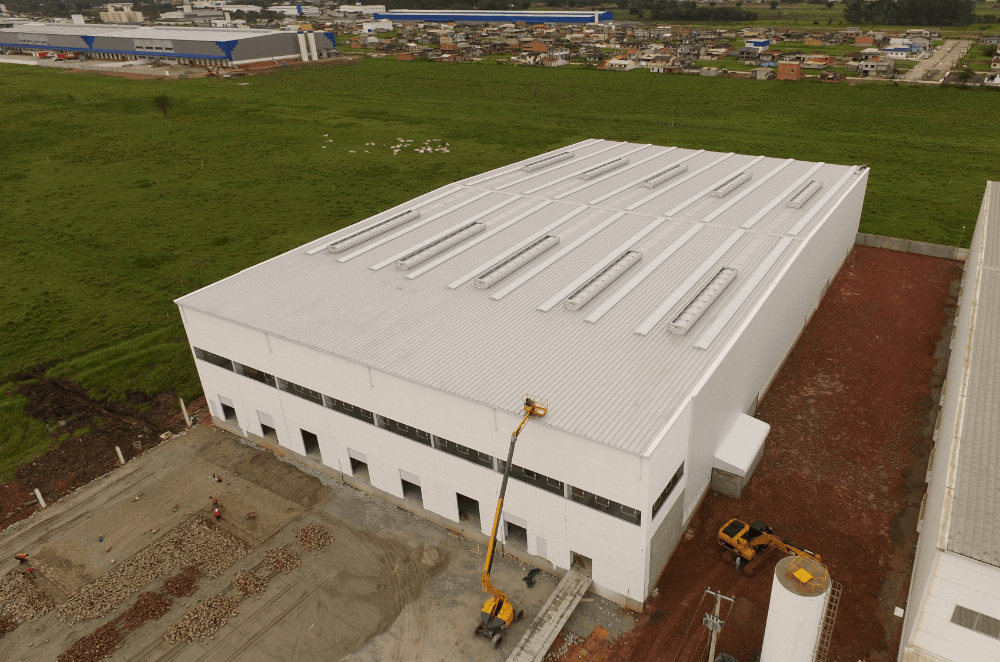
Metal structures are highly recommended and used in the construction of sheds. Previously restricted to large-scale works, metal roofing is now also chosen for variousindustrial retrofit projects in smaller factories and sports courts, for example.Cheaper and more efficient than reinforced concrete, metallic structures combined with good architectural designs help reduce the total cost of the work and bring good results.
Benefits includehigh resistance, great durability and greater lightness,compared to other materials. Due to the lower weight of the structure, the load on the building bases is also reduced,which can mean savings of up to 30% in foundation costs. The disadvantage is the lack of thermal and acoustic protection – anyone who has ever been under a tin roof during heavy rain knows what we are talking about.
An option that has been widely used to compensate for this deficiency ismetal tiles in a sandwich system, with polyurethane filling. This system is capable of contributing to high rates of reduction in electrical energy costs in the warehouse, mainly due to thermal control.
The metal industrial roofing options most used in industrial civil construction are:
Trapezoidal roof
To thetrapezoidal tilesThey are a classic in Brazilian construction, widely used on roofs and facades of industrial and commercial buildings. Its shape and high load capacity allow it to overcome larger spans, making it suitable in special conditions.overload.
They can bemade of zinc-plated steel, galvanized steel, galvalume steel, stainless steel, titanium and copper. In addition to durability, these materials offer lightness, which helps reducestructural construction costs.
Zipped or roll on tiles
They are recommended for roofs with low slopes and larger extensions (100m or more). In the case ofroll on tiles, the indication is for application on a set of parallel trusses, arranged in a modular structure.
In this process,the panels – the tiles – can be made at the construction site.There is even the possibility of carrying out this task at the roof level, using pre-painted, galvanized or galvalume steel coils.unrolled and profiled in situ.
The joining of panels is done by a process calledzipping, which guaranteesperfect sealing and excellent finish, eliminating the need for screws and connection tapes. Just like common trapezoid tiles, they allow the application of thermo-acoustic insulation, such as polystyrene or polyurethane.
Concrete roofs
As already imagined, the industrial roof made of concrete has aweight greater than the optionsmetal rooflisted above, which tends to increase the structural cost of construction – the foundation of the work. As advantages, concrete roofs havehigh durability, not suffering from corrosion or oxidation, in addition to withstanding the action of wind well.
These are the most recommended options when the contents of the industrial warehouse are flammable. The most common format isW-shaped tile, which allows for excellent joining of parts and allows forminimum slope of 2%.
Fiber cement roofs
With wide use in both residential, commercial and industrial projects, theFiber cement roofing has good weather resistance and is also a versatile option that is easy to handle and install.. The disadvantage is that fiber cement haslow thermal resistance.
O acoustic insulation is considered good, reverberating less sound than metal roofs without applying insulating layers. It also has the advantage ofdo not spread flames.
The most common formats arewavyand inW, which allowminimum slopes of up to 5%. However, fiber cement has recently undergone a change in its composition, as the fiber used to create the material – asbestos or asbestos – was banned from sale in Brazil, being replaced bypolypropylene synthetic fiber.
How to Make the Most of Industrial Coverage
We saw that thecost-benefitIt is one of the main aspects that you should prioritize when choosing the industrial shed roof, in order to guarantee the quality of the materials and the system's functionalities. However, it is possible to further improve the roof’s performance by installing natural lighting and ventilation solutions.
All types of coverage listed above can receive domus systems and industrial lanterns, in order to bring morethermal comfortand sustainability for the factory.
The domus favors the strategic entry of sunlight into the environment,providing up to eight times more light than windows or other light inputs with equivalent opening. With this solution, it is possible to reduce or even completely eliminate the use ofartificial bulbs during the day. It is also worth remembering that the domus offers maximumprotection against UV rays.
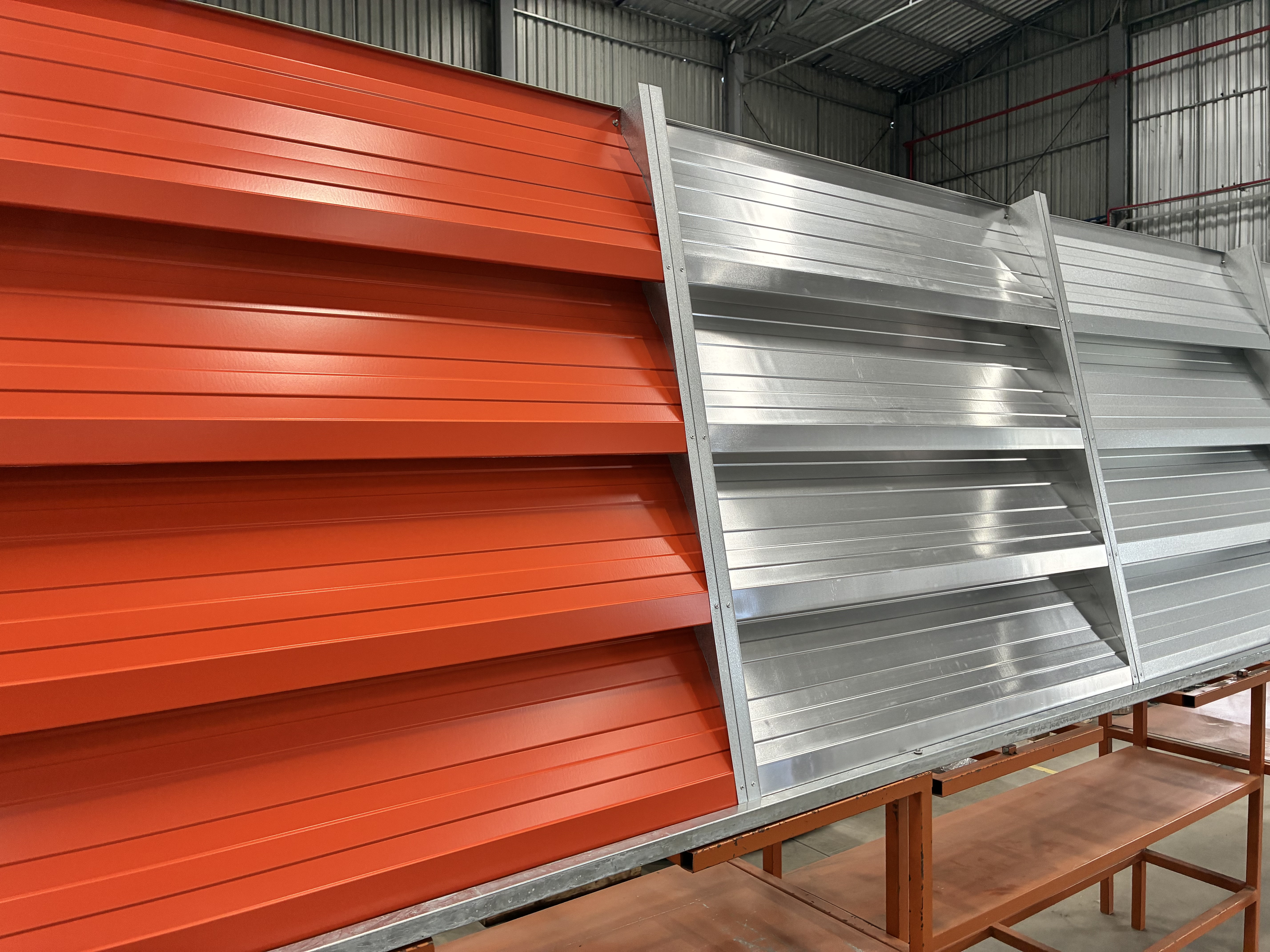
Skylights are natural ventilation solutions that, like domuses, also fulfill the objective ofsave energy and make the factory more sustainable. In addition to providing thermal comfort for the warehouse and reducing the need to use air conditioning devices, the lanterns contribute to the health and well-being of employees due to theconstant air renewal in the environment.
Furthermore, the exhaust process that occurs at the exit of the lanterns eliminates any toxic particles suspended in the environment, ensuring adequate health levels in the workplace.
To learn more about industrial coverage and the best ways to make the most of it, keep following alongour blog, and get in touch if you have any questions!